Gould tests tampering rule as Kenty questions fake HIA's
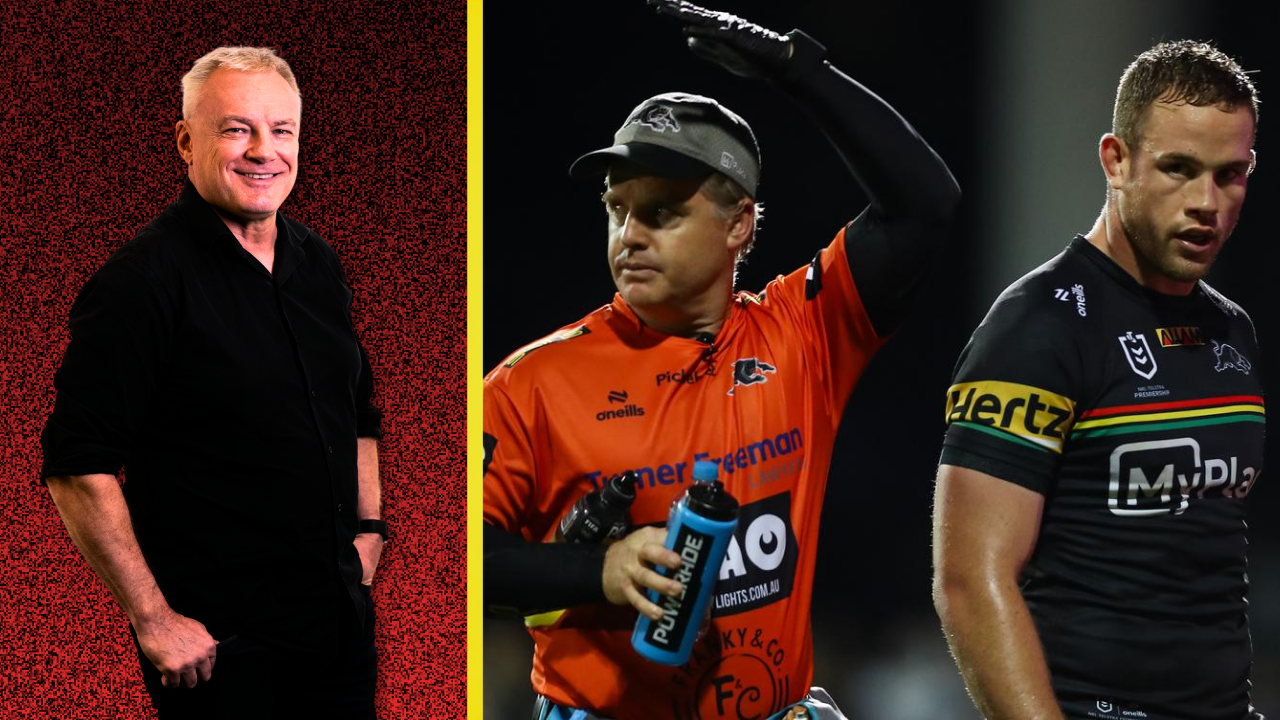
Kenty and Woz unpack a week dominated by Gus Gould’s latest flashpoint, using the Jahream Bula situation to probe the NRL’s integrity rules, coaching influence and a game increasingly shaped by grey areas.
Gould, Bula and a live test of the tampering rule
The conversation opened with Christian Nicolussi’s reporting on Gould’s commentary around Jahream Bula, quickly turning to whether it breaches the NRL’s anti tampering framework.
Kent outlined the contract dynamics first. “There is a clause in Jahream Bula’s contract that needs to be picked up by May,” he said. “If it doesn’t get picked up, then he’s a free agent to go next year.” He added the financial tension. “If the club picks it up, they have to pay more money… they’re waiting for the club to pick it up.”
That uncertainty sits alongside outside interest, particularly Canterbury, and set the scene for Gould’s on air praise. Kent’s view was direct. “If what he said about Galvin is what implemented that rule… then what he said on the weekend definitely contravenes it.” He pointed to the wording clubs were given. “Tampering will now include certain public and private statements that could be seen as attempts to lure or entice a player.”
From there, the focus shifted to the lack of response. “They’ve announced nothing. They’ve done nothing,” Kent said. “We’re still waiting.”
Nicolussi had put the question directly to Gould. “He sent back a two word answer… ‘grow up.’” Kent’s read was that Gould was baiting the league. “I think he’s put his toe in the water and said, ‘You got the guts to take me on?’”
Integrity or appearance
Kent argued the NRL created the rule to avoid properly investigating the original Galvin situation.
“They could go through his text messages, emails… they’ve got the power to do that,” he said. “Instead, they came out with this Mickey Mouse rule.” That decision, he suggested, undermines credibility. “It’s there to give the appearance of integrity in the game rather than true integrity.”
The current silence only reinforces that perception. “After all their tough talk last year… it’s embarrassing for the game.”
Gould’s broader point on coaches and referees
Gould’s follow up comments calling for reduced influence from coaches and referees struck a chord with Kent.
“I stood up and cheered,” he said. “You win the comp playing fast, all but one coach wants the game to slow down.”
He described how coaches shape the rulebook through constant feedback. “They’re not trying to clarify the rules… they’re trying to figure out the limits so they can push it.” The outcome is a sport overloaded with interpretation. “New rule after new rule after new rule, and the fans are going, ‘What’s that for?’”
The disruptor debate and fake HIA's?
The so called disruptor interpretation was held up as the clearest example.
“Why have we gone for a new rule?” Kent said. “Just say, ‘Mate, you obstructed him.’”
He argued the existing obstruction law already covered the act. “If you’re doing that and the referee sees it… just penalise it.” Instead, coaches exploit the detail. “They’re trying to figure out where’s the loophole… so we can make it advantageous for us.” Kent sided with Billy Slater’s view. “It’s an obstruction… it’s so easily solved.”
The discussion then turned to head injury assessments being used strategically.
“There’s no doubt they’re doing it,” Kent said, describing how players can be cycled off and back on. “He gets 15 minutes… comes back on and he’s had a bit of a breather.”
He framed it as situational rather than universal. “I wouldn’t say every team’s doing it… but most of them have probably considered it.”
Staging, high contact and optics
Kent was more critical of players exploiting high contact interpretations.
“We’re seeing players… just a little bit of a brush on the chin and they’re laying down,” he said. “Now they’re challenging on it.”
He warned it risks becoming systemic. “It’s an embarrassing look for the game.”
Responsibility, in his view, sits largely with coaching direction. “They’ve been told that at training… ‘If you feel it, lay down.’”
Max King and the contrast in standards
Against that trend, Kent highlighted Max King playing on with a broken jaw. “What I really loved was he didn’t lay down when it happened,” he said, positioning it as a contrast to current behaviour.
Agents, leaks and player movement
On recruitment, Kent was blunt about how narratives get into the media.
“The agents are all over it… very clever at getting the information out,” he said. But players contribute as well with Kenty highlighting one player who, "walked around the dressing room telling everyone he was going, then blew up when it got reported.”
Latrell Mitchell and the fullback question
The conversation closed with a pointed assessment of Latrell Mitchell’s future at fullback.
“This might be the end of the dream,” Kent said, after South Sydney looked elsewhere following injury.
The core issue, he argued, is physical output. “He just didn’t have the motor… fullbacks run more than anyone.” Despite Mitchell’s presence, Kent said the gap is consistency. “Whenever he got the ball, the whole crowd rose… but he’s not doing it often enough.” The broader implication is legacy: “unless he gets fitter… it’s going to go through as an unfulfilled career.”
A game living in the margins
Across each topic, Kent returned to the same theme: a sport increasingly shaped by those pushing its edges.
“Coaches have been doing this for 30 years,” he said. “They’re trying to find the limits.” The unresolved issue is whether the NRL can enforce its own standards or whether, as this week suggests, the game continues to be dictated from the margins.
Hero image: NRL photos