Dean Ritchie’s 37 years prove rugby league still runs on trust
A Rooster behind enemy lines
Loyalty arrived early for Dean Ritchie, and I reckon growing up as a devoted Eastern Suburbs supporter in the heart of Manly helped put the steel into him. His friends followed Manly and the club was pushed so heavily around him that Ritchie thinks he almost resented it, yet he kept waving his Roosters flag with the East Supporters Club in the Turner Stand at the old Sydney Sports Ground.
His first rugby league memory was probably the 1975 Grand Final, watched when he was six or seven, before trips on old rattler trains and the occasional escape from the ticket collector became part of the adventure. A schoolboy pass got him through the gate for free, Brian Cooley led the chants with a rooster on his head, and Ritchie remembers it all with a tenderness that tells you where his love of the game began: “They were very innocent days.”
The cadetship mattered more than the HSC
Ritchie found his calling before school could tell him he had failed, which is a far better measure of a young person than any exam result. He told his mother he loved sport and wanted to become a sports journalist; through her connection with Bill Mordey, he landed a week of work experience at Big League and met Zorba, who remains his friend.
By year 11, Ritchie was earning bylines at The North Shore Times, and halfway through year 12 the paper began paying him. Mike Coleman then offered him a cadetship before the HSC, fortunate timing because Ritchie says he failed and thinks he failed every subject.
Three years around Cumberland Newspapers gave him the education that counted: council, police rounds, community yarns and sport across the Hornsby Advocate, Parramatta Advocate and Fairfield Advance. He learnt to report before he learnt to posture, and that grounding never left him.
The best lessons came from the next desk
Great newsrooms are apprenticeships without a blackboard, and Ritchie was fortunate enough to sit among people he regarded as highly as the players. After joining The Telegraph following an interview on the day of the 1989 Grand Final, he found himself beside Ray Chesterton, Phil Rothfield and Peter “Chippy” Frilingos.
Chippy taught him mostly by example. They ate lunch together every day, while Ritchie listened to how his mentor chased stories, worked contacts, wrote introductions and dealt with the sports editor. He believes Chippy may have recognised the same hunger in the eager young reporter beside him.
That makes May 2004 especially painful. Chippy suffered a heart attack at work and died instantly, aged 59, while Ritchie was away covering a press conference. Ritchie became a pallbearer and still gets emotional recalling the moment he learnt his mentor was gone. I reckon that grief explains why he recently rang Chippy’s wife, Maureen, simply to check on her. Awards preserve a name; gestures like that preserve the man.
A borrowed desk and a career-making back page
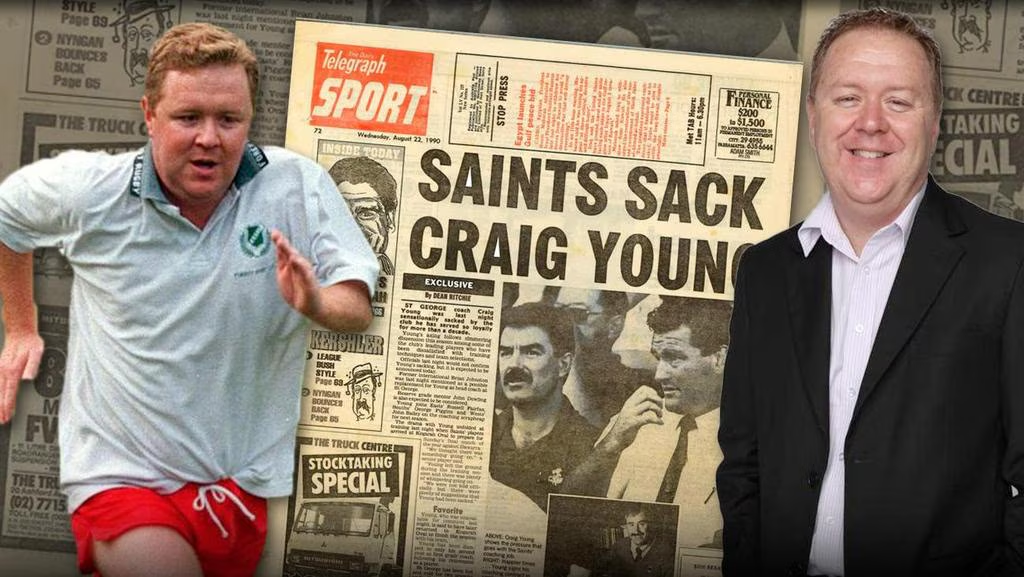
Ritchie’s first major scoop remains the purest picture of his career: a young reporter without his own desk, sitting wherever somebody happened to be absent, suddenly holding the biggest story in town. Paul Osborne told him he thought the Dragons had sacked Craig Young, and after the tip was confirmed, “Saints sack Craig Young” ran across the back page under Ritchie’s name.
He had probably been at The Telegraph only a month or two, yet the exclusive gave him instant credibility and set him on his path. It also annoyed Phil Rothfield, who believed the story should have been his and, according to Ritchie, has never quite forgiven him.
The same instinct later sent a photographer to Belmore after Des Hasler denied there was a story. The camera caught Hasler and Kelly Egan welcoming Johnathan Thurston to a secret meeting, producing another back page. Ritchie later learnt Thurston mistakenly thought the Bulldogs had leaked it, and he thinks the resulting mistrust inadvertently cost them Thurston. That is the thrill and burden of a scoop: publication can change more than tomorrow’s paper.
Trust is not softness
Ritchie is right that a long career cannot be built by burning everyone for one flashy back page. His friendship with Laurie Daley has lasted about 37 years because Daley trusted him and Ritchie says he never betrayed that trust, even when given permission to use material from their conversations.
He admits the friendship can make journalism murky, that he probably protects Daley to some degree and may go a little easier, but he is open about the relationship rather than pretending it does not exist. “I’m a journalist, right? But I’m also a friend and to me friendship means a lot.” I respect that honesty.
Ritchie has still collected plenty of conflict. He admires Phil Gould without having enjoyed a close relationship with him, clashed with Brian Smith, dislikes Wayne Bennett belittling the media and stood his ground under Gorden Tallis’s wild-eyed stare despite being terrified. Yet his instinct is to resolve a clash once both sides have spoken. That is not weakness; it is how someone lasts.
One newspaper, a wider game
Ritchie’s loyalty to The Telegraph is unfashionable, but I reckon it is one of the loveliest parts of his story. He has resisted approaches from elsewhere across 37 years because the paper supported him, and at 58 he would like to finish as a one-newspaper man if it still considers him worthy.
He remains a print journalist to the core, even while enjoying television and radio, where he believes strong opinions and genuine disagreement are essential. The work still demands sacrifice: since beginning Sunday radio with Ray Thomas six years ago, he has avoided Saturday beers and watched all three matches so he arrives prepared. Social media is now imperative for subscriptions and audience measurement, although Ritchie calls its abuse a sewer.
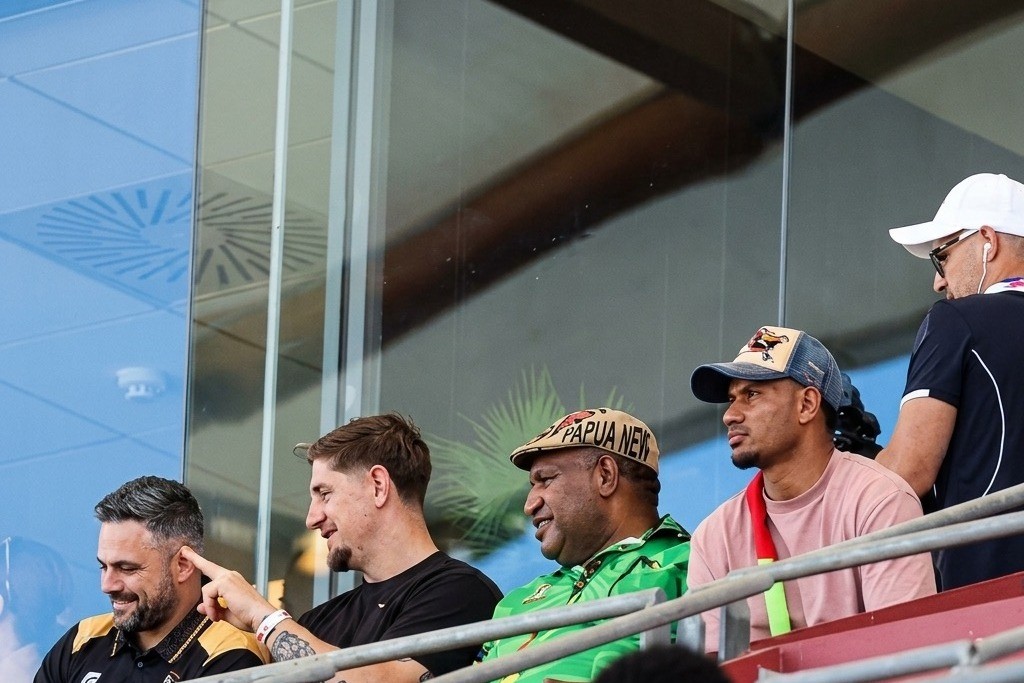
Rugby league has carried him through Australia, New Zealand, Fiji, Papua New Guinea, America, France, England and Wales. He has ridden on James Marape’s plane, broken his glasses catching a bomb from Mal and generated a week of attention for the Perth Bears after Mal’s recruitment comments attracted a fine. For expansion, Ritchie favours Christchurch over another Brisbane team because he sees genuine new horizons there, while a strong English game remains vital internationally.
Still, his final accounting is wonderfully simple: rugby league has given him friendship, and he says he owes the game everything while it owes him nothing. He is right to feel blessed — and the game has been lucky to have Bulldog telling its stories.