Football can't keep hiding the Socceroos
City's appeal won't repair trust
Manchester City's reputation is already damaged, whatever comes next in the English Premier League case, because the argument now reaches far beyond results and trophies.
City have been found guilty on these charges, but their chief executive insists they have irrefutable evidence of innocence and the club says it will appeal. That response belongs alongside the findings; nobody should pretend the appeal has already been decided.
The scale of the material is extraordinary: Rui Pinto handed 70 million documents to Der Spiegel in Germany, with researchers working through emails to find their starting points. This wasn't somebody spending an afternoon digging for dirt.
Over 30 charges concern misleading evidence. Against that, City's absolute insistence on innocence leaves precious little room for middle ground, and I see a narrow path to victory for them.
The appeal apparently goes to a separate independent panel, and I reckon this will reach the High Court. How long it takes, and what the eventual punishment means, remain unclear. Football's credibility cannot simply sit on hold until then.
The damage runs down the whole table
Compensation cannot be treated as a squabble between the biggest clubs, because finishing positions affect livelihoods right down to relegation.
Premier League finishing-position money accounts for 25 per cent of every club's annual revenue, and even one place is worth more than £1 million on average per season. The difference between eighth and 15th is enormous, but a club finishing 15th rather than 14th also has reason to ask questions.
A relegated side could argue that one different result against City might have saved it. That isn't proof it would have survived; it shows how far the consequences could spread beyond UEFA Champions League or UEFA Europa League qualification.
Retired players matter just as much. If the wrongdoing is proven and City's appeal fails, some may have finished without medals they deserved. You cannot give those years back, and the famous last-gasp title-winning goal cannot be viewed in quite the same light.
Players and supporters aren't the accountants
City's players and ordinary supporters should not carry the blame for decisions they didn't make, even though they'll face the anger first.
The players concentrate on playing, while supporters follow a club through rubbish seasons and glorious ones without controlling its finances. Staying loyal isn't an admission of guilt. I understand why City fans are angry.
After the international break City go to Anfield, and I expect the hostility there, and at other grounds, to be relentless. This is different from ordinary football banter.
Agents deserve scrutiny instead of being allowed to disappear behind their players. They structure deals with clubs, and players often don't know precisely what their representatives receive. I haven't seen it established in writing, but I reckon agents know far more than players about these arrangements.
Were relegation clauses considered while the investigation continued? That's a question, not an established fact. There could be implications for agents depending on what they knew.
Australia cannot look away
Australian football cannot dismiss this as somebody else's crisis, because there could be consequences here through City Football Group.
Simon Pearce is named in the documents, sits high in that organisation and runs Melbourne City. Being named does not itself establish wrongdoing, but his influence in Australian football makes this something we must follow closely.
He has played a significant role on the A-League board and in its separation from Football Australia. I regard that split as the biggest mistake our game has made, and the league's current struggles make the argument for it weaker, not stronger.
Our young internationals are emerging from that competition. Its health is a national football issue, not merely a concern for individual owners.
Popovic's courage deserves credit
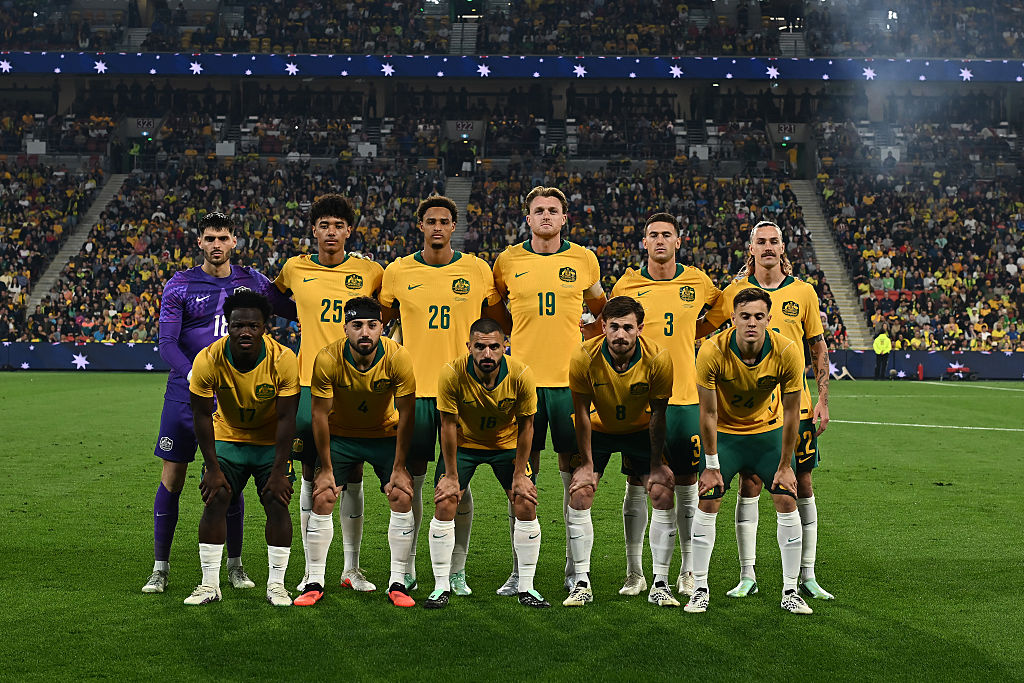
Tony Popovic deserves full credit for taking the game to Brazil across both internationals, rather than treating a famous opponent as an excuse to retreat.
He started the same side twice, and I reckon he believed that was his strongest team. I wish we'd seen that approach at the FIFA World Cup; this looks like a coach who has learnt.
The pressing was extremely effective, Jackson Irvine was excellent in midfield and Nestory Irankunda was terrific in the first game, although quieter in the second. Australia could have won the opener, while Brazil probably deserved their draw.
Lucas Herrington was outstanding. Late in the second game he turned inside from the left and drove a pass between two Brazilian players instead of taking the comfortable option backwards. His two-footed passing and reading of the game are exceptional.
The mistakes are correctable, but let's call them properly: Harry Souttar's challenge was definitely a penalty, and going to ground created the problem. Irankunda also needs to stay out of unnecessary confrontations.
With only two games before the AFC Asian Cup, Australia look firmly in contention. Popovic should expect every player released, regardless of how powerful their clubs are.
Put the national teams where people can see them
The Suncorp international should have been on free-to-air television, and keeping it behind a paywall was another own goal for Australian football.
The first game got the free-to-air slot despite its terrible pitch, while Suncorp offered a superb surface, 55,000 people and two very good teams. I reckon both matches should have been available, with additional coverage giving Paramount something extra for subscribers.
I understand the agreement allocates a certain number of games to free-to-air and the rest to subscription television. Football Australia still should have pushed to get this spectacle in front of everybody.
All Socceroos and Matildas games belong on free-to-air. The A-League is struggling, yet its opportunities for youngsters have helped produce this exciting national side. Hiding that achievement from casual viewers does nothing to reconnect them with the local competition.
Football needed an advertisement. It had one, and wasted it.