Jordan Rankin made his NRL debut as a 16-year-old. But his greatest victory was turning early scars into a coaching compass
The impossible goal became real
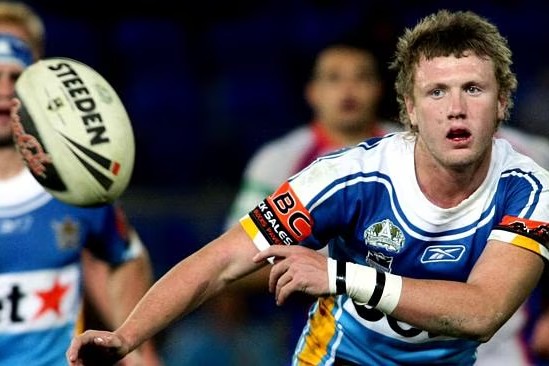
Jordan Rankin didn’t stumble into first grade; he chased an ambition everybody else considered ridiculous. After setting himself the unlikely goal of captaining his junior side, he did it, then his year nine teacher Steve Murphy unexpectedly invited him into an under-20s squad whose players were four or five years older.
His mother understandably wanted no part of it, while Rankin thought he would only train. A week later he was playing halfback against Cronulla, helping snap a five-game losing streak before the side won about eight straight, and that momentum carried him into Queensland schoolboys and the Australian Schoolboys captaincy.
After Australia beat England by 70 points in Townsville, with Rankin scoring twice and kicking several goals, the Titans sent through an upgraded five-year contract. Two days later, travelling towards another schoolboys Test, he received missed calls from John Cartwright offering the potential of an NRL debut. Rankin’s reaction captures how wild the moment was: “I thought it was a prank call.”
Fearlessness carried the 70-kilo kid
I love the audacity of Rankin’s debut because it belonged to a kid who hadn’t yet learnt to fear failure. He caught a train from Brisbane, was collected by his mother, then Murphy drove him to Runaway Bay, where Billy Johnson delivered a baptism of fire alongside first-graders Rankin had never previously met.
The week was effectively an audition, with no jersey guaranteed, but Rankin had spent 11 years rehearsing moments in the backyard. Thrown into the game shortly after halftime with the Titans trailing 16–6, he heard opponents planning to pressure him, saw Kurt Gidley deep and attempted the chip-and-chase he had practised since childhood. He regathered and nearly scored, all while weighing about 70 kilograms and confronting men far bigger and more experienced.
The Titans lost, yet Rankin had achieved the only thing he had wanted since he was five.
The silence hurt more than the tackles
Rankin’s debut was a wonderful story, but I reckon what followed explains why players should not enter first grade before 18. He fully supports that minimum age now because young men are still learning how to become good people, never mind complete footballers.
After the debut, Rankin returned to under-20s for a proper preseason and spent two years developing, yet there was little communication explaining that patience was part of the plan. He began wondering what more he had to do, while media attention and speculation about his absence fed performance anxiety; rather than playing freely, he became consumed by avoiding errors, missed tackles and anything that might cost him selection.
Rankin spent five years with the Titans and played 17 NRL games, an outcome he calls a failure because of everything he had not yet learnt. “I did lose a bit of confidence, I’m not gonna lie,” he says. That honesty matters, because the fearless kid had not disappeared through lack of talent; pressure had taught him to hesitate.
England gave him his game back
Leaving home was the making of Rankin. At 21, tired of criticism and aware he had become comfortable, he contacted Hull FC coach Lee Radford, largely negotiated his own deal and moved alone despite his manager believing it was a poor idea.
Rankin wanted only to enjoy football again, but Hull gave him much more. He lived centrally, walked everywhere, spoke with supporters and embraced a rivalry with Hull KR that he still considers unmatched for intensity, with east and west Hull separated by a bridge and derby games feeling like grand finals. “I fell in love with the game again,” he says.
The disappointment came when Gareth Ellis ruptured his Achilles and Hull redirected resources towards a back-rower, closing off the longer stay Rankin expected. He later regretted allowing potential Melbourne interest to disappear, returned to Australia with the Tigers and accepted Jason Taylor’s offer to learn the wing because he would play anywhere for a first-grade jersey.
Yet England kept calling. Rankin joined Huddersfield, earned a three-year extension within two months, then flourished at fullback for Castleford under Daryl Powell, playing in a side that reached the top four, semifinals and grand finals.
Coming home was bigger than football
Rankin’s finest decision had nothing to do with selection. When COVID struck, his wife’s grandfather became ill and the couple had a four-month-old daughter, so Rankin walked away from a three-year Castleford extension and returned home without another playing contract because his wife had put her life on hold for years.
The family packed within a week, worked through the Australian embassy because their daughter had no passport, received a police escort between flights in Abu Dhabi and entered quarantine, where Rankin had to tell his wife that her grandfather had died while they were over Sri Lanka. They were allowed out for the funeral, then returned to isolation.
Football eventually offered another door at Parramatta. Signed initially as depth, Rankin became reserve-grade captain and began guiding younger players through lessons he wished somebody had taught him. When David Kidwell left and Ryan Carr moved into the defensive role, Brad Arthur invited Rankin to captain-coach the New South Wales Cup side. The days sometimes ran from 5.30am until 8pm, but the team reached the semifinals and Rankin discovered work that genuinely filled him.
The scars have become his coaching strength
I reckon Rankin can become an outstanding NRL coach precisely because his career was never sunshine and rainbows. Captain-coaching taught him to communicate clearly, select teams and run sessions, then Brad Arthur sent him to coach his own younger-grade side, where Rankin’s SG Ball team won the competition before he retired to pursue coaching fully.
His strongest tools are empathy and respect. Rankin coached Ethan Sanders, Blaize Talagi and Sam Tuivaiti, but his interest goes beyond producing first-graders; he wants to help young men, including those carrying difficult upbringings or scars from poor coaching, become better people.
That is why he refuses to rush. A qualified builder, Rankin studies books, podcasts, NFL coaches and different club environments, trying to understand personalities and the relationships that create harmony, because he knows an NRL job involves far more than tactics. His ambition remains gloriously unwavering: “I’m gonna coach an NRL team one day, and I’m gonna do it for a long time.”
This time, the journey matters as much as the destination.