Now that Doueihi has owned his mistake, the Wests Tigers must prove they have standards
Doueihi was wrong — but he should remain the No.7
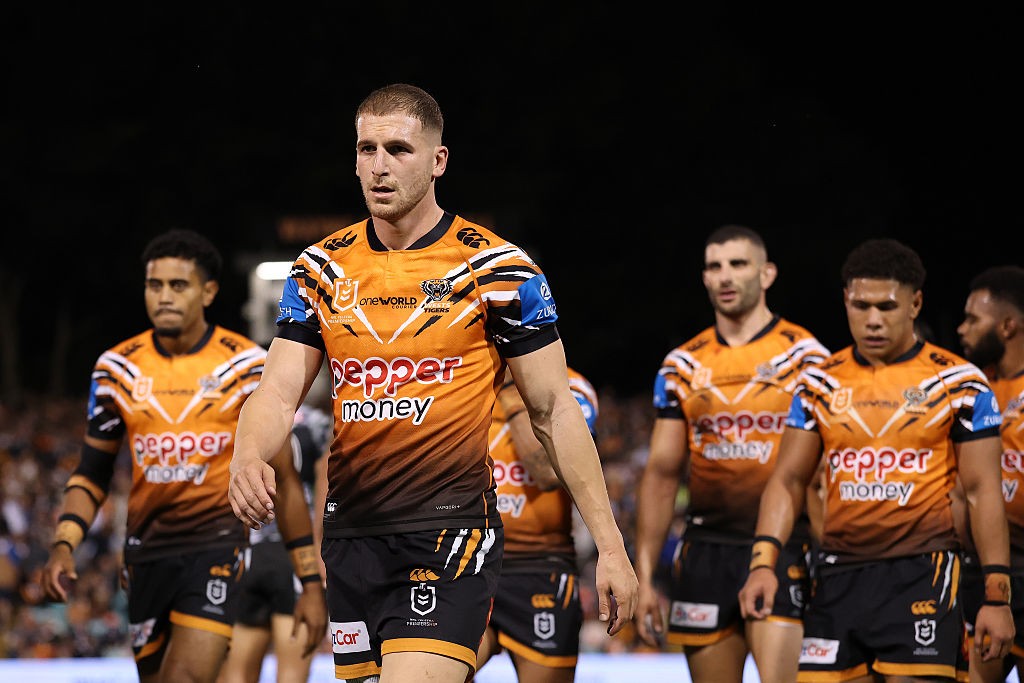
Adam Doueihi should have travelled to Canberra and played wherever Benji Marshall selected him. Refusing to wear the jumper was an extraordinary failure of judgement, and I’m yet to speak to a former top-level player who believes a footballer can abandon his teammates that way.
But one mistake should not end his Wests Tigers career. Doueihi admitted he was stubborn, accepted responsibility for the miscommunication and conceded overthinking got the better of him; I think he deserves enormous credit for answering every difficult question directly rather than hiding behind a statement polished within an inch of its life.
More importantly, he remains the club’s best halfback. He has worn No.7 all year and I think he has done a bloody good job, while his commitment to the next three years sounded genuine. Now comes the test no media appearance can pass: whether his teammates support him when Parramatta apply pressure. A victory buries the drama; another capitulation digs it straight back up.
Benji must be challenged, not protected
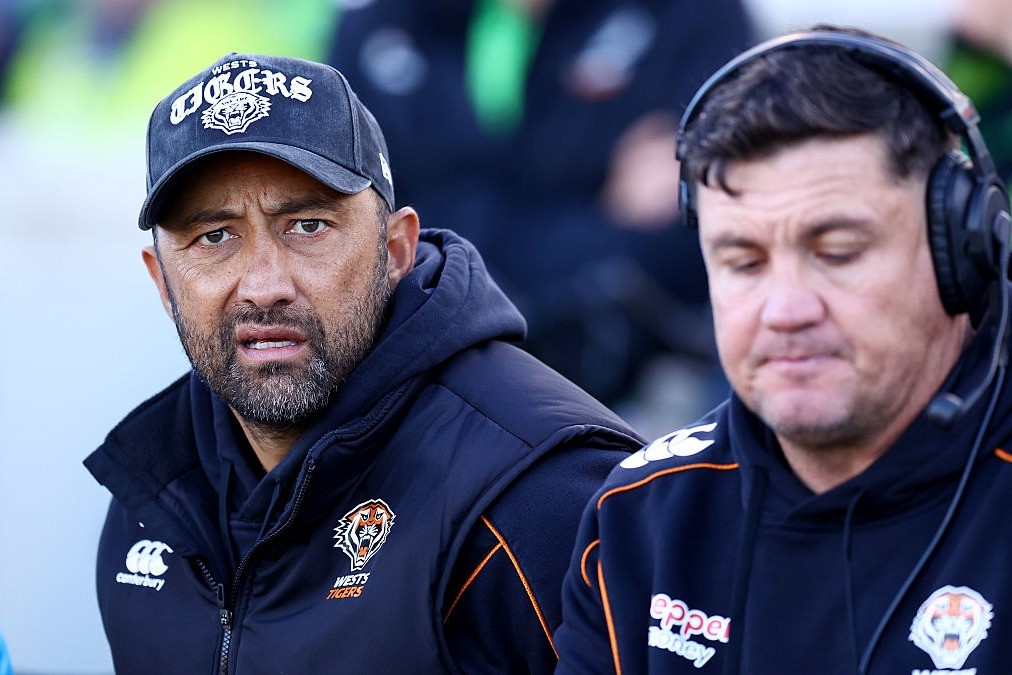
Benji Marshall remains the right coach for the Wests Tigers, but passion cannot become immunity from scrutiny. He accepted a brutally difficult job with a fast-tracked apprenticeship, and his $4 million contract makes him effectively untouchable, yet that only increases the need for experienced people around him who will challenge his decisions rather than applaud them.
I reckon Marshall learnt more during this crisis than in his first two years. He has been honest, he cares deeply about the club and he chose to learn on the run, but first-grade coaching is not a part-time intellectual exercise; it consumes every hour and exposes every error beneath the brightest lights in the game.
Releasing Jarome Luai a year early is the correct call because he does not want to remain, although allowing a contracted player to promote Papua New Guinea through a third-party loophole understandably looks unfair. The larger problem is culture: the club has made the finals only three times, and unless the entire squad matches the commitment of Marshall and Doueihi, the Tigers will keep serving their supporters the same old sandwich with different garnish.
Daley leaves a winner — Barrett should replace him
Laurie Daley should walk away now, with the series won and his reputation strengthened. His departure has been one of rugby league’s worst-kept secrets, although he has publicly insisted no announcement has been made, and the health narrative has been overcooked: Daley has made clear that his health is fine.
The succession call should be Trent Barrett, with Matt King and other strong assistants around him. Barrett’s NRL head-coaching opportunities did not finish well, but Origin is a different assignment — elite players, short camps, clear messaging and an ability to unite the group quickly. I think he can handle it, and the strong endorsements from Andrew Johns and Freddy Fittler matter.
King is the other genuine contender because he works in club football every day and is serving a sound apprenticeship, while Boyd Cordner could eventually do the job but has not coached enough yet. I’d still involve Johns, whose football brain is exceptional, without making him carry every political and emotional burden of the top job.
Cherry-Evans has made the Roosters more dangerous
Daly Cherry-Evans has not crowded Sam Walker; he has accelerated him. Their combination looked clunky early, when neither role was entirely clear, but Cherry-Evans has since stepped back, chosen his moments and allowed Walker to control both sides of the field.
That restraint is the mark of an old professional who understands winning matters more than touching the ball. Cherry-Evans is now calling the shots with calm, direct messages, and when the Roosters needed a field goal he demanded possession and struck a kick that was never missing. Walker, meanwhile, has loved having him as a sounding board.
The Roosters are second and inside the premiership window, even if recent wins have been more workmanlike than brilliant, and the trip to face the in-form Cowboys will reveal plenty. The club insists Cherry-Evans has not decided whether he will play next year. If he does want to continue elsewhere, the Perth Bears should call immediately because classy No.7s do not grow on trees — although uprooting his family for one season would be a significant obstacle.
Canberra can expose Penrith’s wobble
Penrith are vulnerable because they are no longer playing at their usual level; they are surviving matches rather than controlling them, and Canberra have the speed to turn that wobble into genuine pain.
The Raiders’ injured middles are returning, Ethan Strange is a dynamic ballplayer and their pace has troubled Penrith before. Dylan Edwards being unavailable only sharpens the concern, while the Panthers cannot afford complacency this close to the finals, regardless of their ladder position.
Dropping Blaize Talagi is not panic. He has played fewer than 50 games, his defensive reads have become uncertain and he shares an edge with Casey McLean, whose defence remains the principal weakness in his game. That is a difficult workplace for two inexperienced outside defenders. I do not think Talagi’s demotion will be permanent; it is a necessary refresh for a tough young player who can still become very classy.
Canterbury must stop wasting Burton’s greatest weapon
Canterbury have finally simplified their football, and five wins from six matches prove clarity has achieved what endless tinkering could not. Their aggressive, rushing defence unsettles better teams because it attacks the opposition before the scoreboard becomes a problem.
Stephen Crichton has become the main voice and organiser, but asking him to handle the bulk of the kicking while Matt Burton stands elsewhere is football vandalism. Crichton’s kicking has looked awkward at times, including a ball sent out on the full, whereas Burton owns an elite left boot capable of driving the Bulldogs 60 metres downfield or hanging a bomb high enough for the chase to arrive with malice aforethought.
Burton is a runner first: he is tall, strong and dangerous when defenders must respect his carry. Let Crichton organise, let Burton run, and then unleash the boot whenever Canterbury are trapped in their own end. The torpedo is difficult and high-risk, but the normal drop punt still transforms field position. Sometimes the cleverest tactical adjustment is using the obvious weapon.