The road is calling
Retirement should not mean retreat, and Salvatori has designed a ripper of a next chapter after 45 years as a builder. His family is preparing to sell The Estate Byron Bay, a nine-bedroom property between Bangalow and Byron Bay that hosts about 20 guests each weekend, then he, his wife and their dog intend to spend at least a year roaming Australia.
Salvo’s Aussie Pub Crawl is not really about beer, although Salvatori cheerfully admits he likes one. It is about bypassing tourist traps, meeting farmers and cowboys, and giving small pubs and country towns a lift. He says New South Wales alone has 2,000 pubs and Australia has 6,000, so this may be the only retirement plan capable of becoming a lifetime appointment.
The mission suits him beautifully. “I'm really good at going to a pub and not knowing anyone and being mates with all of them by the time I leave.”
An accidental footballer
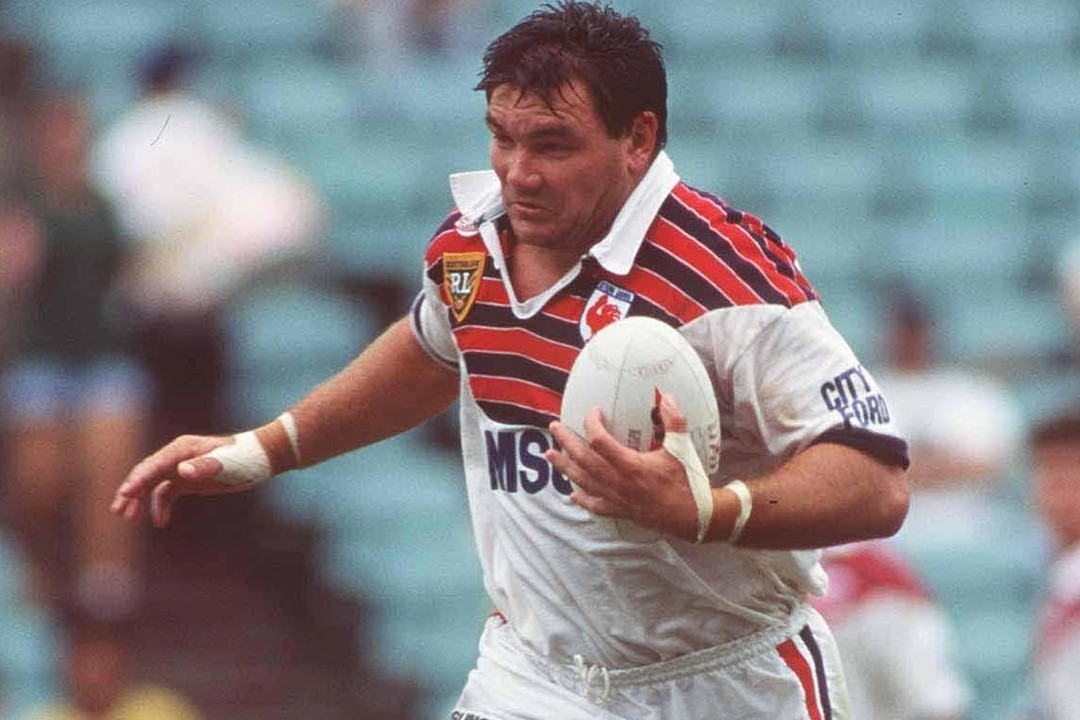
Salvatori’s career is more endearing because he never spent childhood announcing that first grade, New South Wales or Australia awaited him. At 17 he was an apprentice electrician who preferred playing with his mates in the Eastern Suburbs competition, and he initially resisted even having a trial.
Once talked into it, he arrived at the old sports ground and, with his first touch, chip-kicked over the defence, regathered and sent his winger into the corner. A $2,000 contract followed, which looked fairly attractive beside his apprentice wage of about $140 a week.
The important bit came later. Salvatori spent two years learning in under-23s without setting the world alight, improved in reserve grade and then decided half-measures were pointless. “If you’re gonna do this, you gotta have a go at it.” That decision, not childhood destiny, made the footballer.
Hard men, then beers
The old front-row culture was brutal, but Salvatori remembers its fellowship as clearly as its collisions. He names Glenn Lazarus, Sam Backo, Paul Harragon, Mark Carroll, David Gillespie, Steve Roach and Kerry Hemsley among the hardest he encountered, men he met toe-to-toe before sharing drinks afterwards.
Nothing captured that age better than the 1987 preliminary final, when his side lost 8–6 to Manly on a fast, hard track. After meeting Crusher Cleal again decades later, Salvatori discovered they both regarded it as the toughest match they had played, an arm wrestle and slog from beginning to end.
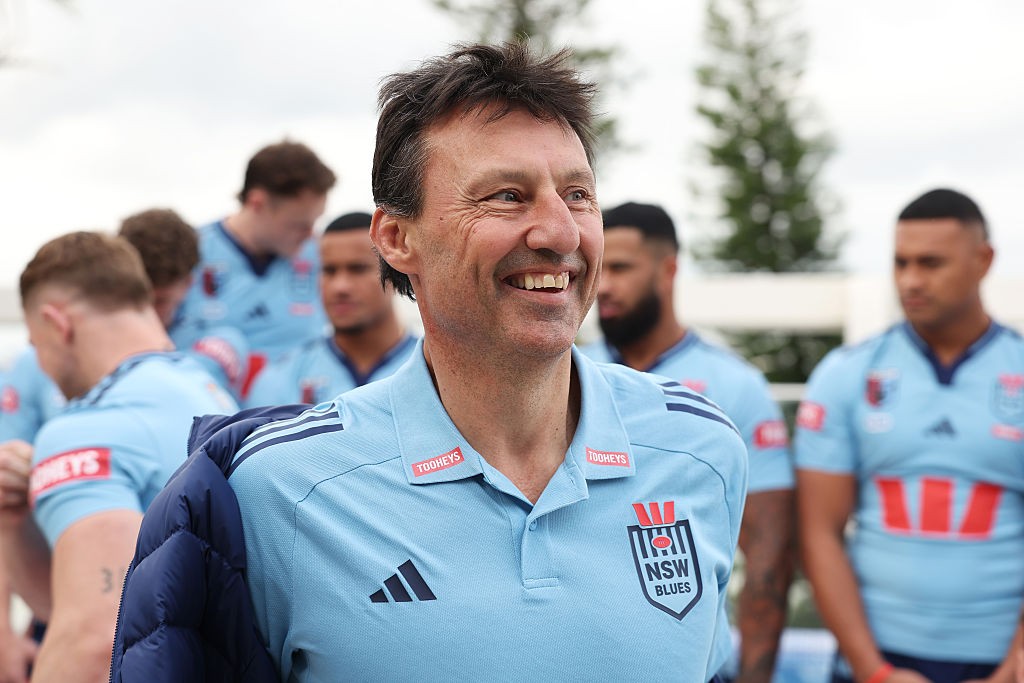
His loyalty remains just as fierce. Having played alongside Laurie Daley for the Blues from 1991 to 1993, Salvatori cannot stomach people tearing him down. He calls Daley a legend who bleeds blue, and he is right: criticism is easy, but devotion earned across decades deserves respect.
The charge that wrecked a season
Salvatori owns the moment that derailed 1993, but the full story is as wild as rugby league folklore gets. Against Penrith, he says Brett Boyd grabbed and repeatedly twisted his genitals during a pile-on, leaving him furious enough to rise without looking and launch what he insists was not a conventional headbutt but a “head charge”.
He received five weeks, his side lost that match and the next five, and they tumbled from first to sixth. Barred from training temporarily by Jack Gibson, Salvatori adopted what he called the VB training diet, then returned to be man of the match in consecutive victories.
The comeback could not repair everything. Canterbury won the last match 20–2 and Salvatori’s side missed the top five by one point. He honestly believes that team could have won the competition, which is why the regret still has teeth.
Leaving gave him life back
Walking away from the Roosters hurt, yet I reckon it saved the final stretch of Salvatori’s career. After 11 years, the club captain felt publicly belittled at training following a comprehensive loss to Norths, and he demanded a release because he believed the new direction no longer suited the way he controlled a match as a ball-playing front-rower.
With distance, Salvatori accepts that he was probably becoming jaded and his knees were already badly damaged. The move to the Rabbitohs brought a new lease of life: he played every match, won player of the year and retired at 30, believing there had to be more than football.
His body vindicated that call. By 53 he needed two replacement knees after reaching a point where he could barely walk 10 metres without hearing them crunch. Those consequences are why I reject lazy complaints about player salaries; careers are short, while damaged bodies last.
Recognition belongs to the family
The Roosters are right to bring their former players home, particularly men from an era Salvatori felt had drifted from view. His life membership arrived unexpectedly, alongside Brendan Hall, while this year’s Indigenous-round recognition places him after previous honourees Arthur Beetson, Ron Saddler and Kevin Stevens.
The loveliest part is that his eldest daughter, an Indigenous artist and sculptor, designed the jumper. She signed a nondisclosure agreement, so Salvatori had not even seen it, leaving the former captain outside the secret while his own family carried the story forward.
He was also, as he recalls it, selected in the Indigenous team of the century and thinks he shared the bench with Sam Backo and Laurie Daley. These honours are not nostalgia for nostalgia’s sake. They reconnect a club with people who gave it years of their bodies and lives, and Salvatori wants that recognition to continue.
He survived by talking
Salvatori’s courage is clearest not in any football collision, but in how he carried his family through the 2002 Sari Club bombing, which took his wife and 87 other Australians. He had stayed behind to mind the children and says he probably would also have died otherwise; of the roughly 40 people in his travelling group, he recalls 24 or 25 not returning home.
At about 3am, a knock brought news of the bombing. What followed was a search through hospitals and surgeries amid scenes Salvatori likens to a war zone, then nearly two weeks without confirmation about his wife. Through Alan Jones, he pushed publicly for help, and John Howard arrived before promising to clean up a response Salvatori remembers as chaotic.
His method of surviving was never silence. “Acknowledging it means you've gotta talk about it.” He never hid the horror from his children, and their decent, settled adult lives are his most meaningful legacy.
The pub crawl needs a purpose
I believe the road trip becomes truly worthwhile if Salvatori can turn goodwill into practical help for former players living with brain injuries. CTE is a sleeping giant. An unnamed former teammate is struggling medically and financially while needing ongoing care, convincing Salvatori that assistance cannot stop at research.
The NRL has recently made provision to cover medical examinations, including brain scans. Salvatori will probably be examined himself because he forgets things, although he is not presently concerned. I support his immediate, human priority: raising money so affected people can meet food, grocery and household bills when Medicare or health insurance gives little back.
That is the right target. Salvatori is not chasing profit and is willing to fund the journey himself. He wants to meet people, lift country pubs and help families under pressure. “Life's a rollercoaster.” Few men have more right to say it, and I admire that he keeps facing forward.