Peter Sharp kept choosing coaching, until one horrible year broke the spell
The late developers are worth waiting for
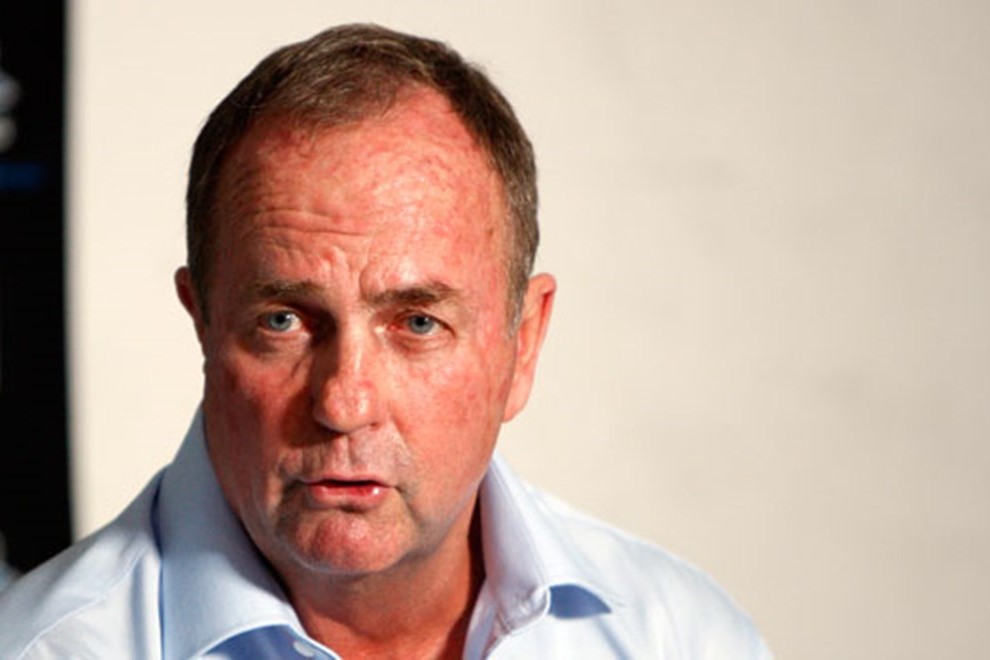
Sharp’s work at Canterbury suits him because he still believes development should be patient, honest and grounded in what a player actually does, rather than the noise surrounding him. He helps with recruitment, occasionally joining Gus to explain the club’s strengths, weaknesses, coaching and pathways, but his enduring interest is in the kids coming through.
That matters because Peter Sharp knows potential is only a promise until first grade tests it. Max King developed late, Jack Underhill is doing the same, and Sharp would rather give young footballers time to learn their craft than rush them towards a debut they may not be ready to sustain.
“Slow down. Take your time. Learn your craft. Come through the grades.”
That is unfashionable advice in an impatient game, which is precisely why I reckon it is valuable.
Maitland gave him his football compass
Everything in Sharp’s football life leads back to Maitland, where childhood in the early 1960s meant cricket, footy and endless lessons learned without anybody calling them lessons. He came through weight divisions — he thinks three-stone-seven, four-stone-seven and six-stone-seven among them — and remembers kids running around in garbage bags before the annual weigh-in, then piling the weight back on afterwards.
Sharp calls himself a slow, small backrower, hardly the ideal combination, but footpath football taught him to draw and pass, create a hole and find an extra man. He reckons children probably play less of it now, partly because there are fewer footpaths and far more social media.
His dream was beautifully local: “I had a dream of playing for Maitland. It’s all I dreamt about.”
He reached first grade, played in the packed 1977 grand final against Cessnock and discovered that a working-class district could make rugby league feel like the centre of the world.
Gary Sullivan saw the coach before Sharp did
The best coaches do more than improve players; they reveal something those players have not yet recognised in themselves. Gary Sullivan, who moved from Newtown to coach Maitland after representing Australia in a World Cup, was that man for Sharp.
Sullivan brought patterns, knowledge and care, and Sharp kept asking why they were doing things. He thinks those tactical questions prompted Sullivan to tell him he should try coaching, planting an idea that survived a back injury, overseas travel and what Sharp estimates was 24 years as an electrician — a trade he cheerfully admits he was terrible at.
By about 1985 he was back at Maitland, coaching reserve grade before being recalled to finish 1986 with first grade. Sharp wanted to coach because Maitland was his club, and that uncomplicated loyalty became the foundation of a career that would eventually carry him far beyond it.
The kid sent back was the gift of a lifetime
Sharp’s Newcastle years capture why junior coaching can be the purest job in rugby league: talented kids desperate for a crack, a little base at Dudley and enough freedom to coach them properly. After working through junior teams and reserve grade, he coached Jersey Flegg in 1992, where two young halves, Frank Barrett and Andrew Johns, trained with grade before Johns was sent back.
Sharp immediately told the manager — whom he recalls as Mick Quinn — that the wrong player had returned, although privately his side was ecstatic. Frank Barrett was a good player; Johns, Sharp says, was a superstar kid.
The stories already carried the spark of what was coming. Johns once led teammates to a nightclub before a Good Friday captain’s run, arrived in skin-tight jeans and moccasins, claimed he had been at the movies, then trained better than everybody. Sharp’s verdict was immediate: “He was gonna be a handful.”
A sandwich opened the door to the big time
Sharp’s meeting with Brian Smith is one of those rugby league yarns that deserves to live forever because it reveals both men in half an hour. Late in 1996, Sharp travelled from Newcastle in a suit carrying a briefcase filled with training sessions and, he thinks, a weekly plan; Smith, he recalls, appeared in shorts and thongs.
When Smith asked what was in the briefcase, Sharp replied: “A corned beef and pickle sandwich.” He had the Parramatta job immediately.
Sharp regarded working with Smith as a golden opportunity, and Parramatta opened his eyes to a football world beyond Newcastle. It also prepared him for Manly’s difficult move from part-time habits into full-time professionalism, although the Northern Eagles merger was another matter entirely. Sharp calls it a massive flop from day one: Gosford and Manly were too far apart, money and training grounds were scarce, and the whole arrangement became so consuming that he once drove 20 minutes down the freeway before realising he had left his wife behind.
Travel kept giving him another life
Sharp’s curiosity saved him from becoming trapped by one version of himself. As a young man he flew to London, bought a Kombi near Waterloo Bridge — he thinks — worked winters as a hod carrier and spent summers travelling Europe; later, coaching carried him back overseas.
Melbourne was a breath of fresh air, although family commitments limited him to 12 months. Hull FC then won 13 straight after he arrived, with Sharp remembering summer Friday Knights of 22 or 23 degrees as something close to perfection.
After Hull dismissed him, Matt Williams invited him to spend 10 weeks with Ulster in Belfast. Sharp stayed a year and was even offered the head coaching job, despite his wonderfully candid response: “I got no idea what I’m doing.”
Specialist coaches could handle scrums, line-outs and attack, but Sharp ultimately declined. Still, he loved the tough, willing Irish players and found Belfast fascinating — proof that coaching’s setbacks sometimes redirected him towards its richest experiences.
Cronulla broke the coach in him
By the time Peter Sharp arrived at Cronulla, he was comfortable as an assistant. He had no great urge to be the man out front again. He was happy coaching, helping, working behind Shane Flanagan. Then the peptide investigation engulfed the club, Flanagan was stood down for 2014 and Sharp was asked to fill the breach.
The picture he painted was of a club unable to escape the storm. “Every time at training you turned up, there'd be 10 press there,” he said. Players had possible suspensions hanging over them, Toddy Carney was, as Sharp put it, “in full cry”, and the bloke suddenly holding it all together knew deep down he should not have taken the job.
“I was not in the right head space to be, to be a head coach,” he told me. “You gotta give it 100%, mate, 110%.” Sharp knew he did not have that to give. There was no attempt to dress it up years later, only the honesty of a man who could see his own part in an ill-fated season.
I reminded him that Paul Gallen had publicly criticised him, saying it was hard for the players to buy in when the coach was not buying in. Sharp did not bristle. “It's got some merit, you know,” he said, before gently adding that the players, with suspensions looming, were not fully invested either. He called it what it had become: “a bit of a blame game”.
When I asked what the pressure had done to him, his answer landed quietly. “That was it for me. I'll never coach again, and never have.” He will still attend training, but from the grandstand. The desire to step onto the grass and take charge had gone.
Did Cronulla break him as a coach? “Yeah, it did as a coach.” There was no bitterness in the way he said it. If anything, there was sympathy for everyone caught in that year, and the weary acceptance that something he had carried for most of his life had finally been taken out of him.
The people matter more than the game
Sharp’s deepest lesson is that rugby league can be abrasive without losing its humanity. He reckons handling criticism, boards and outside noise separated him from coaches such as Cameron Ciraldo, who he says remains measured while also coaching well on the field. Modern players train harder and are fitter, yet coaches and staff live under relentless scrutiny, while rule changes and inconsistent refereeing interpretations only add pressure.
But football is not the hardest thing Sharp has faced. His son Dylan died in 2017, and Sharp now does annual work with the Black Dog Institution, including an October walking challenge. His message to anybody struggling is simple: “Just reach out to someone and have a chat to someone.”
That is the real measure of Peter Sharp. After 32 blessed years working full-time in rugby league, he still loves its players, kids and coaches, but understands it is only a game. People are the reason he stayed, and helping them is the part that lasts.