Ricky Walford’s greatest legacy is that he never left Walgett behind
Love made a home of the tin humpy
Poverty shaped Ricky Walford’s childhood, but it did not define it, because his memories of the Namoi Reserve are held together by family rather than bitterness.
The home had a dirt floor, no running water, no sewerage and no shower, while washing meant collecting river water with his grandparents, carrying it back in buckets and heating it in a copper over a fire. The shack had one or two bedrooms and an open sleeping area, with people sometimes moving outside during summer.
When the family received a four-bedroom Department of Housing home at 107 Arthur Street, complete with running water, a laundry, kitchen and lounge room, Walford says they thought all their Christmases had arrived at once. About 15 people lived there and he generally slept on the lounge-room floor, not getting his own bed until he was around 14 or 15.
That sounds desperately hard to me, yet Walford reaches for the thing no housing report could measure: “We had a lot of love in the house.” His grandparents basically raised him after his mother, probably 17 or 18 when she had him, moved to Sydney seeking better opportunities. Their discipline could involve a jug cord or a length of hose, but their home gave him belonging, kinship and a foundation strong enough to carry him far beyond the riverbank.
Bush football carried him across every mile
Walford was not simply discovered by rugby league; an entire bush community helped place him where the game could find him.
He thinks he first picked up a football at four or five, playing because his uncles loved rugby league, and he remembers having enough natural pace to loop around the opposition during a 1972 school carnival against Coonamble. Walgett won and the players received the coveted winner’s pennants, a small prize that remained vivid decades later.
Nothing about the pathway was convenient. Three teams — under-18s, reserve grade and first grade — met at 6am before bus trips that could take four hours, or seven when rain forced them onto longer sealed routes. Players could arrive home around midnight before school, while coaches had work the next morning. “They’re good memories, you know?” Walford says, and that affection tells you plenty about country football.
Schoolboy selection then meant travelling through carnivals at Coonabarabran, Tamworth as Walford recalls it, Bathurst and Tweed Heads. The school raised money through raffles or fetes, while townspeople and the local council also helped. Staying at school opened the Australian Schoolboys door in 1981, and five envelopes from Sydney talent scouts followed. Talent mattered, but community effort paid the fare.
One phone call changed everything
The best turning points rarely arrive neatly, and Walford’s came beside a diesel truck in 43-degree heat.
His grandparents initially opposed Sydney because he was only 17 and they believed the city was dangerous, although Walford thinks his grandfather was a little more supportive. The Roosters eventually flew him down, where the teenager from Walgett found Ron Jones intimidating, received $500 and heard that the club would look after him and Auntie Christine, who lived in a one-bedroom Bondi flat where Walford slept on a mattress.
Back home, Walford was filling a truck at Joe Maloney’s service station when Joe called him inside because Bob Fulton was on the telephone. Diesel overflowed as Walford reacted. Fulton wanted him at a first-grade trial against Bathurst St Pat’s and promised a plane ticket with everything paid.
Walford flew down and never returned to live in Walgett. Family was his saving grace during that first year, while the club found him work washing new cars at City Ford, vehicles he could only dream of owning. I love that contrast: the future Origin winger did not arrive polished or privileged; he arrived ready. “I’m a 17-year-old kid coming from Walgett, you know,” he says, and the courage in that move should never be underestimated.
Rejection opened the right door
Being released by the Roosters could have finished Walford at 19, but it became the shove that made his career.
He wanted to stay because he was comfortable and felt greater consistency was coming, only to be told the club would not keep him beyond the year. His cousin Don Jenner, a law student who became a makeshift representative, contacted clubs and helped secure an opportunity at North Sydney, where Chow Hayes and Ken McCaffrey offered no promises beyond selecting him if his form deserved it.
Walford played first grade there, worked in the cellar, learned to pull beers and earned $2,000. Then Chow called with interest from the Dragons. Don handled the meeting, where a $20,000 contract was waiting, but insisted they leave for lunch before returning with a demand for $25,000. The Dragons accepted immediately.
That was brave negotiating when Walford feared he might remain at North Sydney for $2,500 and cellar work. It also changed his life. He joined the Dragons in 1985, stayed through 1996 and played most of his 231 first-grade games there under the demanding Roy Masters. “I really found my feet there,” Walford says. Sometimes loyalty means staying; sometimes it means having the nerve to walk through the better door.
He gave himself the chance to do something extraordinary
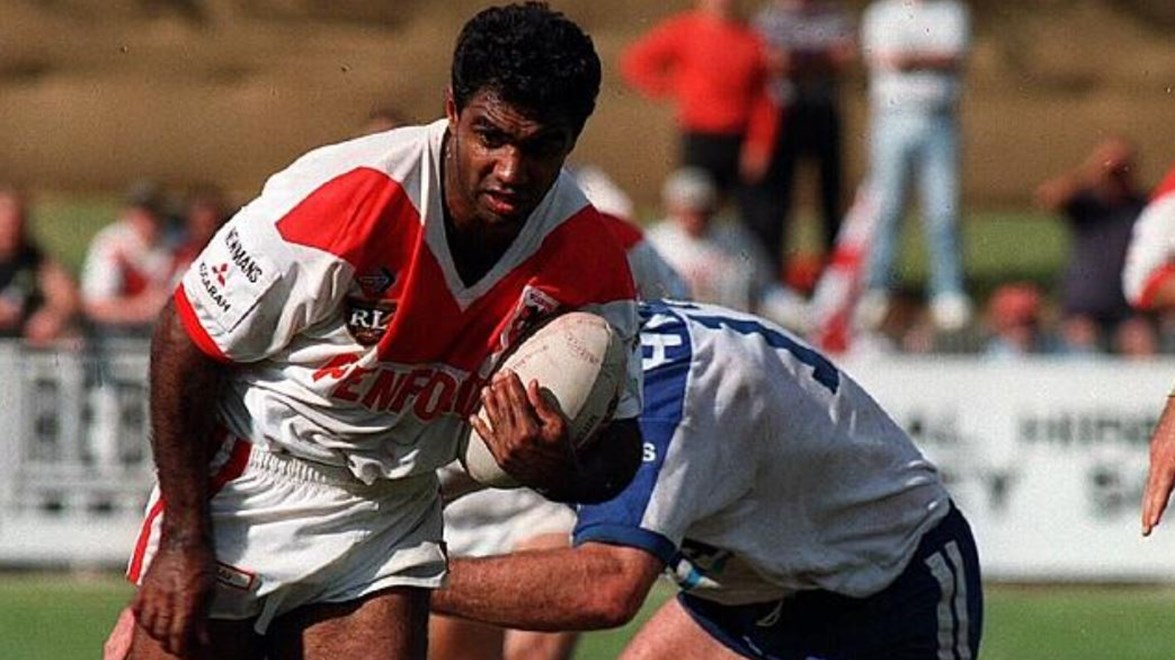
Walford’s career deserves to be remembered for effort as much as achievement, because the defining image is not merely a try scored but a chase made when surrender would have been easier.
He reached State of Origin in 1990, something he had never imagined as a boy in Walgett, and was selected for all three games. A quad injury suffered while goal-kicking in Melbourne a couple of hours before the second match ruled him out, and he thinks staying fit would have improved his prospects of Australian selection. There is disappointment there, but no resentment towards Rod Wishart, Mickey Hancock or anyone else chosen.
Then there is the grand-final footage shown every year: Walford pursuing a runner over the length of the field, catching him only after the try had been scored. His explanation is the measure of the footballer. “You gotta give yourself a chance to do something that's extraordinary, you know?”
He played in grand finals, scored two tries in a match against his boyhood hero Steve Rogers and even met Tina Turner while appearing in the famous commercial, where footage captured him cuddling her. Those are wonderful decorations, but the chase is the man: keep running, even when the odds of changing the outcome are disappearing.
The oval carries a name; the community carries the legacy
Walford’s finest work began after the crowd stopped watching, because he kept returning to the place that first carried him.
The council-owned number one ground in Walgett became Ricky Walford Oval, while the Ricky Walford Shield is played there as part of a carnival that has run for 33 years. Walford has attended for 32 of them and presents the shield, although he sometimes feels uneasy about the honours because he believes other Walgett people probably deserve equal recognition.
That humility is admirable, but I reckon the name belongs there. The carnival brings football and recognised players into an isolated northwest region where there is not much regular footy, giving children practical contact with a game they may not be able to watch on paid television. Walford’s concern that many communities no longer have junior league is justified: television contracts may fund rugby league, but volunteers, gala days and continued communication keep it alive.
His wider message matters too. Walford welcomes Indigenous and Pacifica cultures being celebrated as a festival everyone can share, provided people remain proud of who they are and politics can be kept separate from sport, difficult as that may be.
“You never forget where you come from,” he says. Walford never did, and that is why his name on an oval feels less like a monument than a promise to the next child carrying a football beside the Namoi River.