City’s crisis is bigger than one club and Australian football cannot ignore it
City’s fans are being punished already
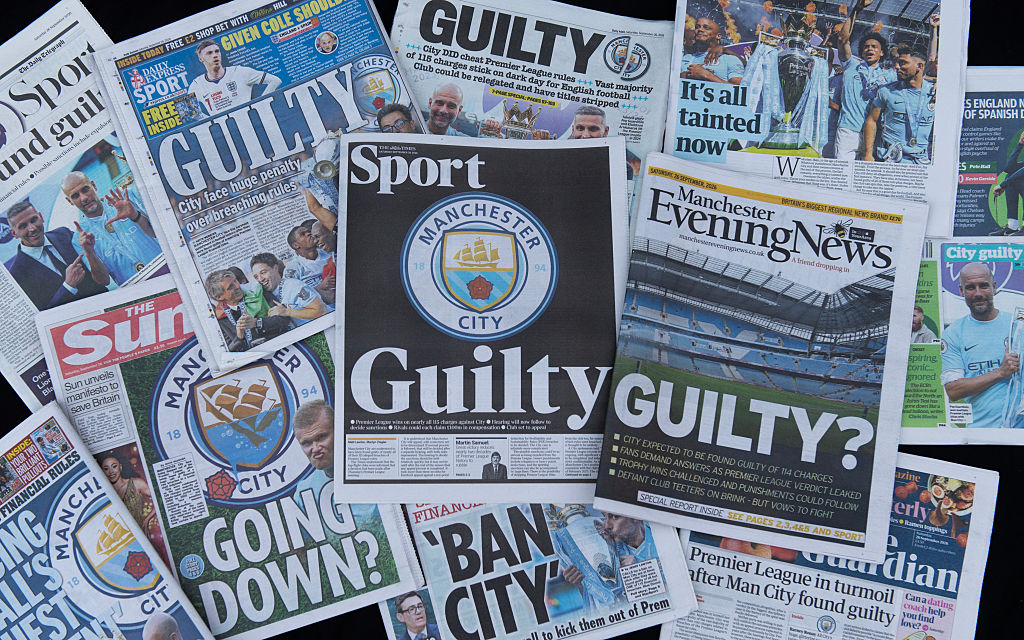
Manchester City allegedly face an adverse finding on one hundred and fourteen of the one hundred and fifteen charges, but nothing is official, leaked information is not a verdict and City maintain they are innocent. That denial matters when we do not know the full facts of a complicated legal case.
What cannot be denied is the damage already done. City’s next away match after the international break will be hostile, and I expect that treatment at every ground while this drags through appeals. The club’s supporters had nothing to do with its administration, yet a City shirt will now prompt an immediate association with the charges.
I feel for genuine supporters such as Simon Hill, who stood on the terraces when City were in League One and then watched an extraordinary rise bringing six EPL titles, five FA Cups, six League Cups and a Champions League. Those memories could be challenged by whatever comes next, while current players who were not there during the relevant period will also wear the abuse.
That is heartbreaking. Supporters should never become collateral damage for decisions made above them.
Bad rules still have to be obeyed
I have little sympathy for the argument that financial rules can simply be ignored because the established order is unfair. City may argue the rules should never have existed, and I understand why wealthy newcomers would see them as protection for a big-club cabal, but once the guardrails are in place every club must follow them.
The stated purpose is to stop clubs overspending and going bust, yet the system has gone too far when accountants dictate football decisions. Newcastle could not spend freely and sold Elliot Anderson on the final day of the financial year because they feared exceeding the limits and receiving a points deduction. It was a horrific football decision forced by financial compliance rather than coaching, scouting or talent.
Newcastle and Aston Villa have also been penalised by UEFA for overspending in European competition. I am not sure about Aston Villa’s capacity, but Newcastle’s owners could surely cover the cost; the problem is that clubs with those resources can theoretically afford far more than the rules allow.
Football needs controls, but it cannot become an accountancy competition.
Australia cannot pretend this is somebody else’s problem
Australian football must watch the City case closely because there could be ramifications here, although that remains speculation rather than fact.
City Football Group took over Melbourne Heart and the Melbourne club has since become a genuine talent factory, even if it has never captured the city’s supporters as strongly as intended. Simon Pearce was a major driver of that takeover, was involved in the APL’s separation from Football Australia and has had a heavy influence on the direction of the Australian game.
That does not establish wrongdoing in Australia. It establishes a link, and links matter when the parent organisation is facing a case of this scale.
Nobody should race ahead of the evidence, but nobody here should look away either. The EPL has a worldwide audience and this mess is capable of reaching far beyond England.
The Socceroos finally attacked a heavyweight
The Socceroos were excellent against Brazil because they played with courage rather than treating the occasion like an exhibition. I give the coach enormous credit: Australia pressed high, competed aggressively and made a world-class opponent uncomfortable from the start.
Jackson Irvine drove the midfield, Tete Yengi delivered a huge 90-minute output and the pressing from Connor Metcalfe, Yengi and Nestory Irankunda caught Brazil offside during the first half. Irankunda looked dangerous throughout and his free kick produced extraordinary theatre, although a top-class goalkeeper should have saved it because the keeper did not even dive.
Paul Okon-Engstler was excellent in midfield, while Harry Souttar, Alessandro Circati and Patrick Beach gave Australia real authority at the back. Brazil improved and dominated more of the second half, but the Socceroos remained dangerous and conceding with the final header hurt.
Brazil probably did not deserve to lose, so the result was probably fair. The performance mattered more: Australia showed it can attack elite opposition rather than merely survive it.
This young defender is the real deal
Australia’s young centre-half was the best player on the pitch by some distance, and I believe he will reach a big club and become a superstar. He is already a star.
The impressive part is not desperate tackling. He barely needs to tackle because his positioning and anticipation are so advanced: he intercepts passes before they reach the striker, reads balls over the top early and once got a crucial toe in as Raphinha appeared to be heading towards goal.
His distribution separates him from ordinary defenders. He looks forward first, punches passes into midfield at the correct pace and can open his body to use his left foot, despite being naturally right-footed. That sounds simple until you have played at that level; a pass arriving on the wrong foot or half a second late slows the entire move.
Harry Souttar is already in my top group of Socceroos, while Nestory Irankunda, Alessandro Circati, Jordan Bos and Patrick Beach show why selecting future lists could become difficult. This generation has serious quality.
Stop bagging the A-League and start supporting it
Australian football parents cannot spend thousands developing talented children and then sneer at the A-League. That attitude is ignorant and self-defeating because the competition they dismiss is the most likely pathway their children will need.
Most of the current Socceroos came through the A-League, just as almost all of the previous great generation came through the old NSL. This is our breeding ground. It produces the players people celebrate once they reach the national team, yet too many at grassroots level refuse to attend matches or treat the domestic game with any respect.
If the A-League dies, those young players have nowhere meaningful to play before going overseas. It is very unlikely that an academy prospect will jump directly abroad without first entering an A-League environment, while teenagers who lose faith in football are already walking into rugby league and, in Melbourne, AFL. There is nothing wrong with choosing another sport, but football cannot complain when it refuses to support its own competition.
You cannot demand a pathway while helping destroy it. Support the local game.