Newcastle’s miracle has exposed Penrith, now the Roosters carry the grand final burden
The Knights produced a victory for the ages
Newcastle’s 16-14 win was not merely brave; it was one of the greatest finals performances of the NRL era, built on scramble defence, ambition and the rare conviction that being reduced to 12 men did not require them to retreat into their shell.
Even in the wet, they kept moving the football, with their middles carrying bravely and their halves digging into the line so effectively that Newcastle somehow manufactured overlaps. Kalyn Ponga was phenomenal, the young forwards kept turning up and Sandon Smith owned the defining moments: first the quick tap that caught Penrith walking back with their heads down, then the late intercept from Liam Martin and an 85-metre dash to seal it.
That is the difference between surviving a final and winning one. Newcastle were better in the effort areas from the opening bell, and when the match demanded someone take responsibility, Smith did it twice. No Knight had a bad game, while their supposedly superior opponent spent too much of the night waiting for the extra man to win it for them.
Penrith outsmarted themselves
Penrith deserved to lose because they tampered with the nucleus of a side that had won four competitions, then failed to provide the leadership required when the game became chaotic. I would have started Lindsay Smith, and Nathan Cleary should either have started or been saved until the final 20 minutes.
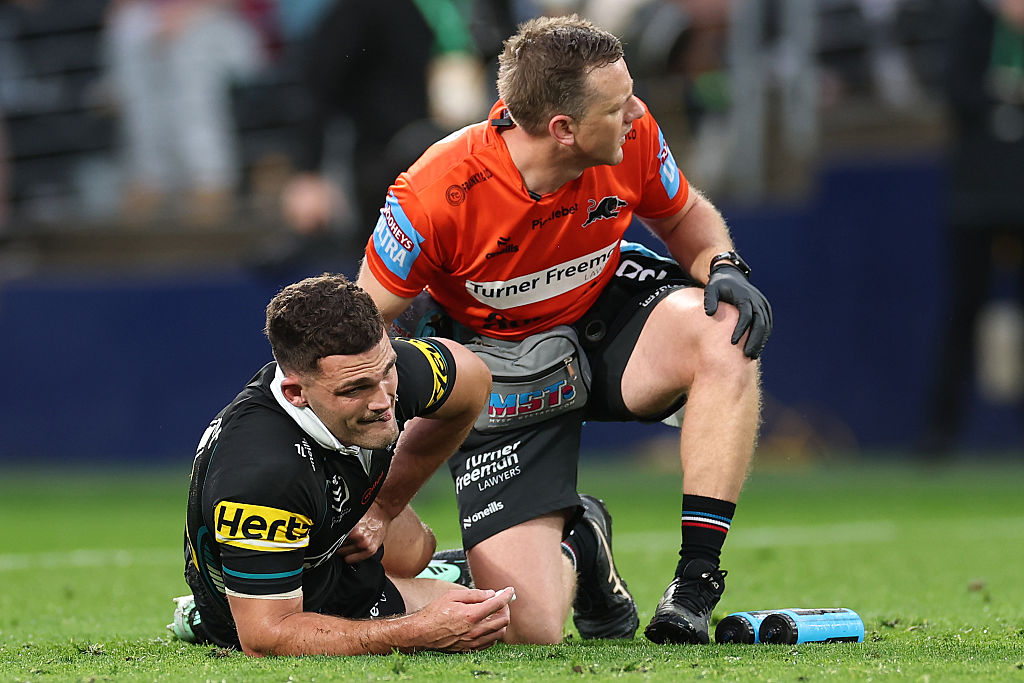
Instead, Cleary entered after 20 minutes with the score 6-all, despite already carrying a broken right foot. Penrith were building pressure and beginning to settle, so the risk was unnecessary; he was one run from disaster, and disaster arrived in the form of a double compound fracture of his left leg.
The tactical muddle continued when Isaah Yeo, Martin and Scott Sorensen were all off together. Yeo had tight calves and Martin’s removal looked tactical, but after losing Cleary and having Dylan Edwards play the second half with a busted PCL, Penrith needed their voice on the field. They became frustrated, lazy and strangely passive. A reserve-grade side should create points against 12 men across that length of time. Penrith could not.
Crossland’s accident still demands punishment
Phoenix Crossland’s tackle was an accident, not an act of malice, but the game cannot ignore a dangerous action that ends with a bone protruding through the skin. The referee had no realistic option except to send him off.
Crossland began around the chest and swung behind Nathan Cleary while covering from the inside, with his sideways momentum taking him down towards the legs. He is not a dirty player, and defenders operating under fatigue cannot simply release every ball-carrier near their own line, but this one went catastrophically wrong.
The difficulty is that injury plainly affects punishment. Had Cleary limped away, Crossland probably receives a sin bin or merely goes on report; because the medicab and gurney arrived, the consequences escalated immediately. Crossland has now been referred directly to the judiciary, and I expect a lengthy suspension, potentially around six weeks. Missing the grand final is a savage price for a player Newcastle would not have reached it without, yet the laws leave little room for sentiment.
The grand final pressure belongs entirely to the Roosters
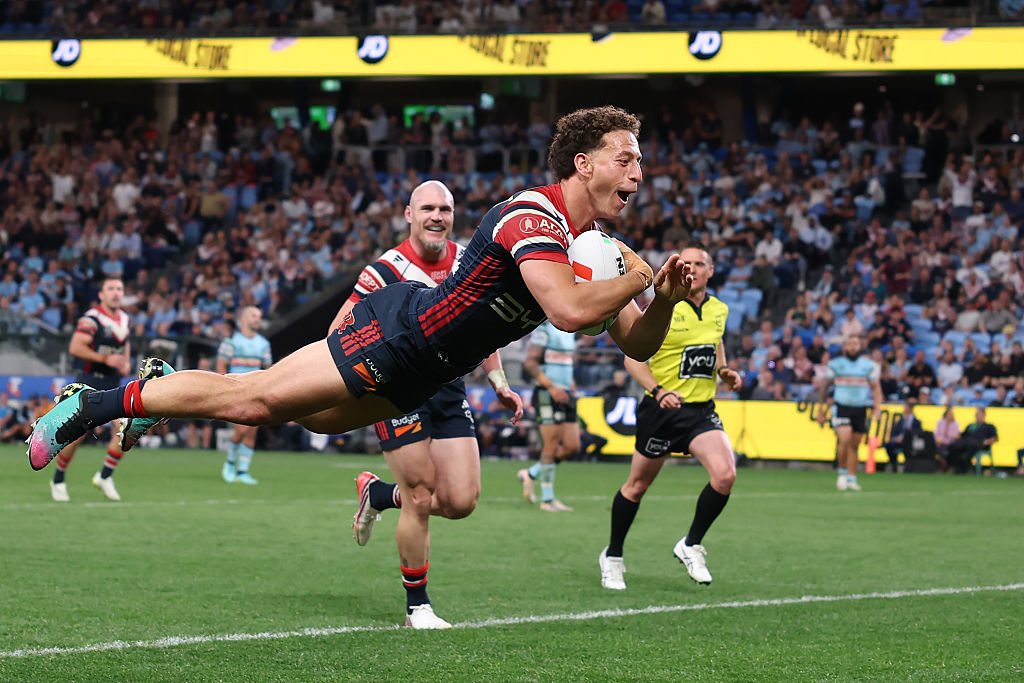
The Roosters should win the grand final, and that is precisely why Newcastle are so dangerous. One side carries the expensive roster, the seasoned grand-final performers and seven seasons of expectation; the other collected the wooden spoon last year, has not won a premiership for 25 seasons and arrives with nothing to protect.
Sandon Smith gives the contest its perfect edge. The Central Coast junior was at the Roosters last year and I reckon he viewed himself as one of their heirs apparent, only to be squeezed out when they signed the ageing but vastly experienced Daly Cherry-Evans. Now Smith wears Newcastle’s famous No.7 jumper against the man whose arrival displaced him.
Newcastle must attack Cherry-Evans relentlessly, sending their powerful back-rowers at his right edge until the Roosters overprotect him, then snapping back down the short side towards Dom Young. Justin Holbrook also knows the Roosters intimately after running their attack last year, while Smith and Young have both been inside that system. The Roosters will win narrowly, but if they fail to shut Newcastle down early, this fairy tale will become horribly real.
The bunker blunder cannot be spun
The Roosters were strong and physical in comfortably beating the Dolphins, but the decision to move Ashley Klein into the bunker after his shocker the previous week was indefensible. Dropping an official from one role only to place him in another position capable of deciding a final is not accountability; it is changing his chair.
The controversial try should not have been awarded. The available footage showed the sideline and try line contact as simultaneous, there was sufficient evidence to overturn the decision and the same incident has been ruled no try repeatedly throughout the season. Unless officials possessed an angle unavailable to everyone else, it was a howler.
None of that erases the Roosters’ warning shot. Their strike power came to the fore, while Naufahu Whyte and Victor were particularly good through the middle. But Newcastle cannot be bullied in the same fashion, and every decision will carry greater scrutiny this week. The NRL should concede the error rather than reaching for another explanation nobody believes.
Newcastle have become bigger than a football team
Newcastle’s greatest weapon is no secret: an entire region has climbed aboard. Supporters endured a four-hour journey after train disruption, filled buses, lined the streets and later welcomed the team home in pouring rain. They did not whinge; they simply paid, travelled and roared their club into a grand final.
That bond was not created during finals week. One of Justin Holbrook’s first acts after taking over a wooden-spoon side was to take the top-30 squad into the Hunter mines, connecting players with a region built on coalfields and hard labour. It was smart coaching because identity cannot be manufactured with a slogan painted on a dressing-room wall.
The broader lesson for junior development is equally blunt. Young players need more football, more responsibility and some contact with the real world, not endless protection because they are labelled athletes. A day’s labour can be as valuable as a training session, while playing more games builds football intelligence that cannot be downloaded from a whiteboard. Newcastle understand who they represent. That is why tens of thousands of supporters will feel like a 14th man.