Finals contenders need hard edges, not soft excuses
Cowboys won, but proved nothing
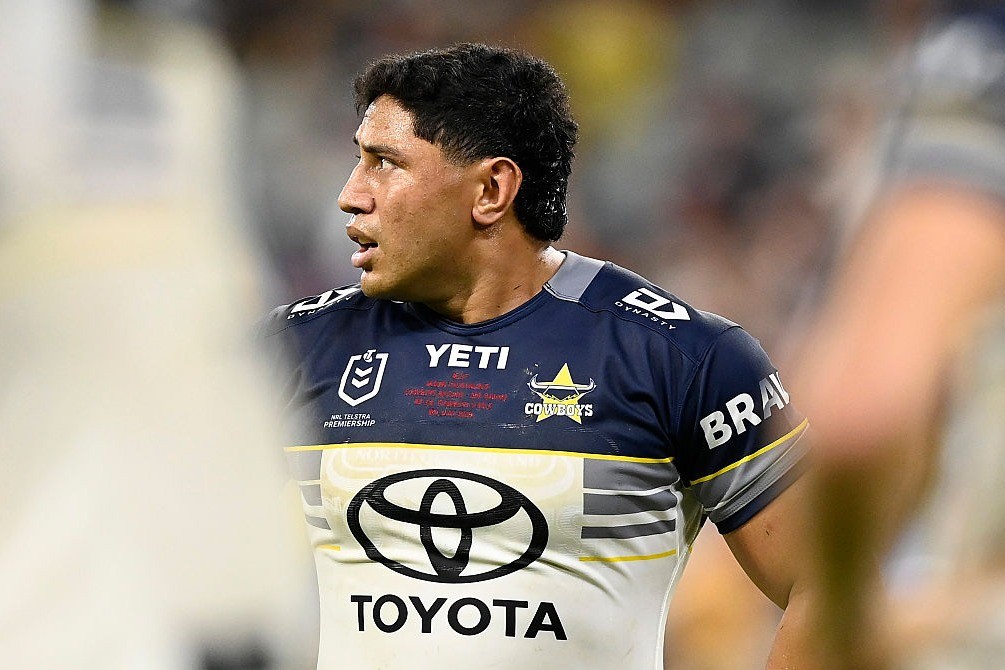
North Queensland needed a statement against the Gold Coast and delivered a result instead, which is enough for two competition points but nowhere near enough to establish them as a finals threat.
The Cowboys started quickly through Scott Drinkwater’s 40-20 and Jason Taumalolo’s close-range try, yet the Titans were probably still in the contest until about the 65-minute mark. After being carved apart by the Roosters, a genuine contender should have overpowered a bottom-eight opponent and removed all doubt; instead, the same defensive uncertainty remained out wide, where the edge combinations still look uncomfortable working together.
Jaxon Purdue’s 70-metre solo try underlined his elite talent, while his time in the halves will broaden a player who has already spent plenty of football in the centres and has a future at fullback. But Drinkwater remains the centre of this attack and Tom Dearden is being missed. The Cowboys are seventh, and their football currently looks seventh.
Finals fitness is built in pain
The next month will expose which clubs have prepared for September and which have merely drifted towards it. Tough training blocks around this point of the season are not folklore: long runs, contact, shuttles and repeated efforts refill the tank after months of wear, with that work taking roughly a month to bed down.
GPS numbers reveal the decline before the naked eye does, particularly when effort areas begin falling away among three or four players. That is when good clubs load the work, absorb some flat performances and prepare to peak when the stakes rise.
Kieran Foran has linked Manly’s premiership hardness to the left and right edges training against each other, and that principle matters more than any fashionable recovery theory. Those players competed daily, stayed in their combinations and trained with the physicality they expected to reproduce on game day. Larger modern squads may have diluted that internal contest. September still rewards the teams that practise discomfort rather than avoid it.
Matt King needs a disruptor
Matt King deserves every chance to succeed with New South Wales, but a positive personality and a sharp football brain should not be surrounded only by agreeable voices. Origin camps need somebody prepared to challenge the room.
The former Manly coach would be ideal in the short format because he has played for Australia and New South Wales, won premierships with Manly and enjoyed success as a coach. I have no doubt he still wants to coach after an unhappy Gold Coast tenure, where the results never arrived, although his dominant personality raises the obvious question of whether he could tolerate being an assistant.
That complication is exactly why I would involve him. Matt King does not need a ceremonial helper carrying witches’ hats; he needs somebody experienced enough to disagree with him before Queensland finds the flaw.
Metcalf must seize the jumper
Luke Metcalf has his opportunity at the Warriors, and he cannot waste it complaining about which number is printed on his back. Te Maire Martin has a hamstring problem and is apparently out for two weeks, opening the door for a player who led the Dally M standings until injury last year but has spent substantial time in New South Wales Cup this season.
I think the Warriors handled Metcalf’s earlier unhappiness exactly as a strong club should. When the rumblings began that he wanted the No.7 jumper rather than five-eighth, Andrew Webster chose players committed to the role available, shut down the agitation and moved forward. There has been no noise since.
Now Metcalf must be match-ready because the third-placed Warriors need a reliable next man up. Martin’s own return from a bleed on the brain, without shying away from contact, has been exceptional; replacing him like-for-like is not straightforward. Beat Penrith with Metcalf functioning well, however, and Webster will have a real selection decision.
Walker pursuit is recruitment chess
Canterbury’s stated pursuit of Sam Walker is both genuine recruitment and strategic mischief, because smart clubs do not merely build their own roster — they squeeze their rivals’ salary caps.
The Bulldogs cannot speak to Walker yet but have made it known they will move from November 1 if he remains unsigned. The Roosters suspect the noise is a smokescreen designed to drive up his price, and they may be right, but every club uses versions of the same tactic: force a rival to overspend now, then attack the emerging player it cannot retain two years later. It is chess played with contracts and grudges.
That subplot gives the latest Roosters-Bulldogs clash extra bite. James Tedesco is out with an ankle issue, Canterbury are seeking a seventh win in eight games and need victory to remain close to the eight, while the Roosters can still finish second. I reckon the Bulldogs might cause the upset because their defence and confidence are ready for the contest.
And here is another hard call: I think Stephen Crichton could eventually become a devastating back-rower. He has the size, step, pass and kicking game to terrorise smaller halves, although he remains one of the game’s best centres.
Concessions cannot manufacture belonging
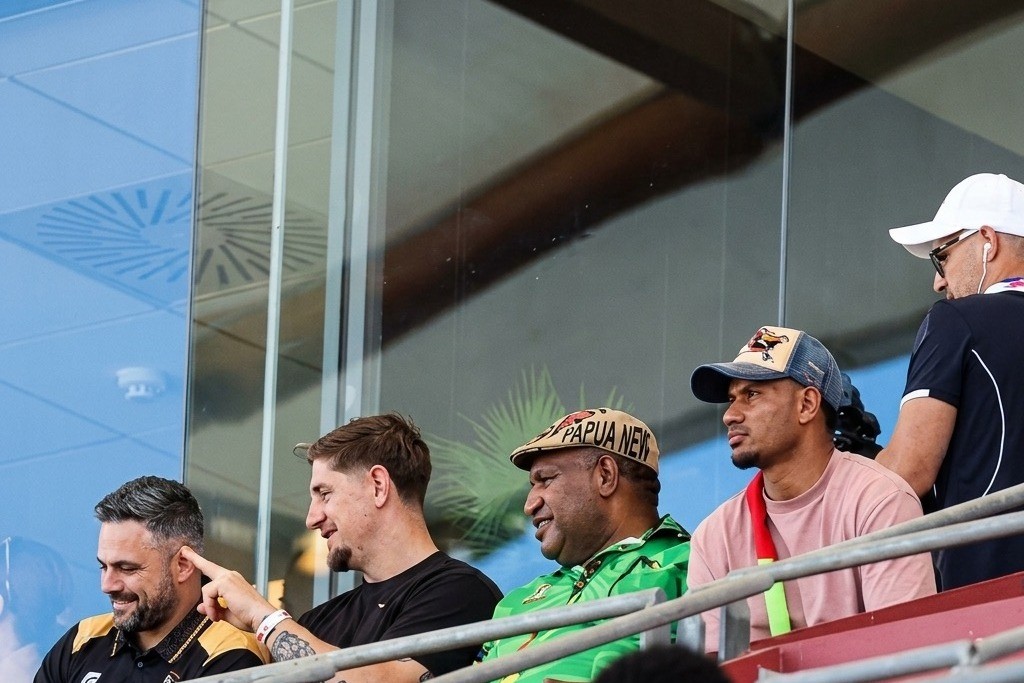
PNG should not enter the competition on the assumption that extraordinary financial concessions will solve every recruitment problem. Wayne Bennett has raised the tax-free money available, but if players still need an outsized inducement to relocate, the game must ask whether the market is ready rather than pretending arithmetic creates belonging.
Rugby league has already lived through warped financial systems. Melbourne were stripped of two competitions and still display those trophies at headquarters, which reduces punishment to office decoration, while the post-Super League salary cap fell to roughly $2 million or $3 million and contracts that had reached $1 million dropped towards $100,000.
Current players deserve their money, but they should understand where it came from. Earlier generations played internationals that could cost them money, relied on modest appearance bonuses and built careers on contracts unimaginable beside today’s figures. Expansion must honour that sacrifice with a sustainable model, not another special arrangement everybody will resent.
Gold Coast must stop buying shortcuts
The Titans’ problem is culture, and culture cannot be imported in one recruitment window. It has to begin with local juniors, committed supporters and a coach given enough time to survive inevitable mistakes.
Gold Coast already have the raw materials in Keano Kini, AJ Brimson, Jayden Campbell and Cooper Bye, who stayed despite Melbourne trying to poach him. Reece Walsh was also a Gold Coast junior. The issue is turning that nursery into a club young players want to represent, even when more successful rivals come calling.
Frequent coaching changes have not helped, so the Titans must play the long game with Josh Hannay and give him a genuine five-year plan. There will be another couple of years of pain, but I see considerably more reason for optimism there than at Wests Tigers or Parramatta. The breakthrough will come when supporters keep arriving through poor results and local players stay for less. That is culture; everything else is a brochure.
Accor is the problem, not a conspiracy
South Sydney are not deliberately underpromoting Accor Stadium games; I reckon that theory gives strategy far too much credit when the simpler explanation is that many supporters dislike the place.
Outside grand finals, Origin and other major occasions, Accor lacks atmosphere, is difficult to reach and feels empty even with crowds around 15,000 to 20,000. Allianz Stadium offers a far better experience, while Brookvale, Leichhardt, Jubilee and Belmore prove that 11,000 people close to the field can generate more energy than a much larger crowd scattered through a concrete bowl.
Rugby league feeds on tribal pressure — supporters riding every tackle, players hearing every reaction, the ground feeling alive. Empty upper decks covered by giant jerseys fool nobody. Accor works for spectacles; as a weekly home, it is punishment with cup holders.