Jai Arrow’s 100th game shows rugby league at its absolute best
Two games bigger than football
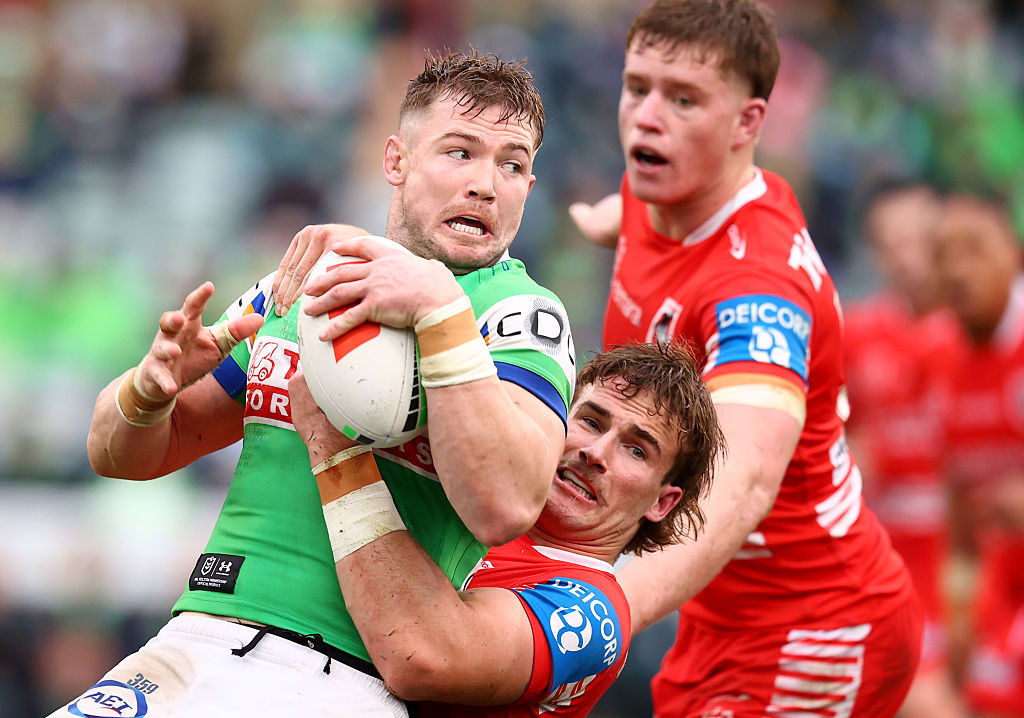
Jai Arrow was stranded on 98 NRL appearances when his MND diagnosis arrived, having never reached 100 games at any of his three clubs, and the idea of carrying him across that line began with Wayne Bennett walking past a commemorative bar mat in his home and becoming fixed on that unfinished number.
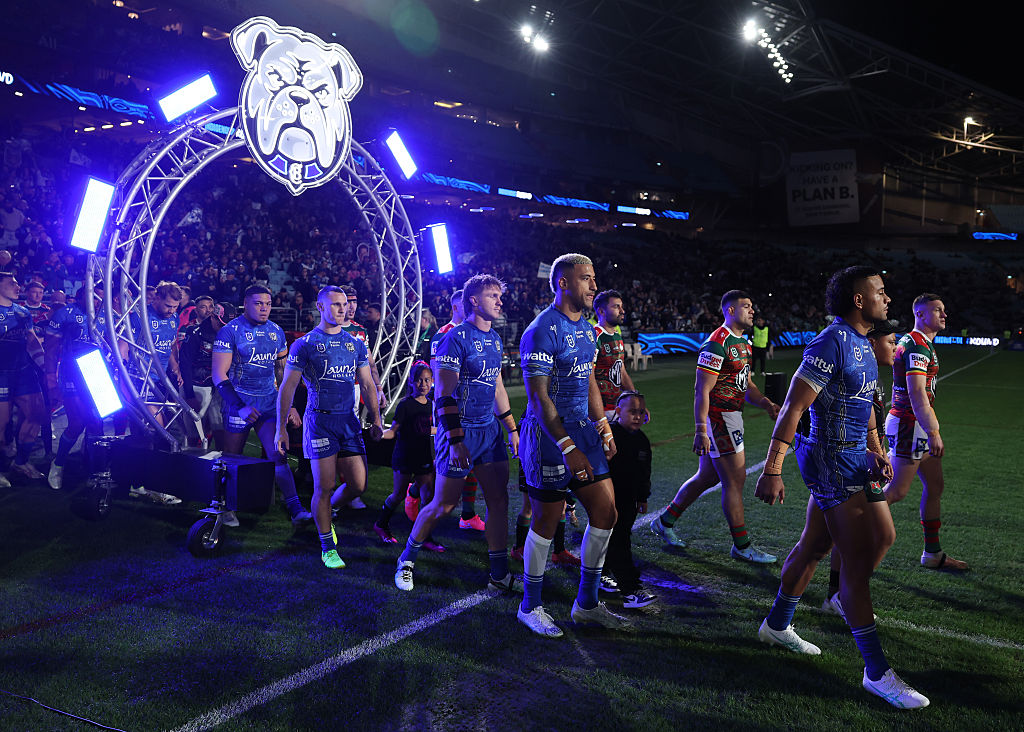
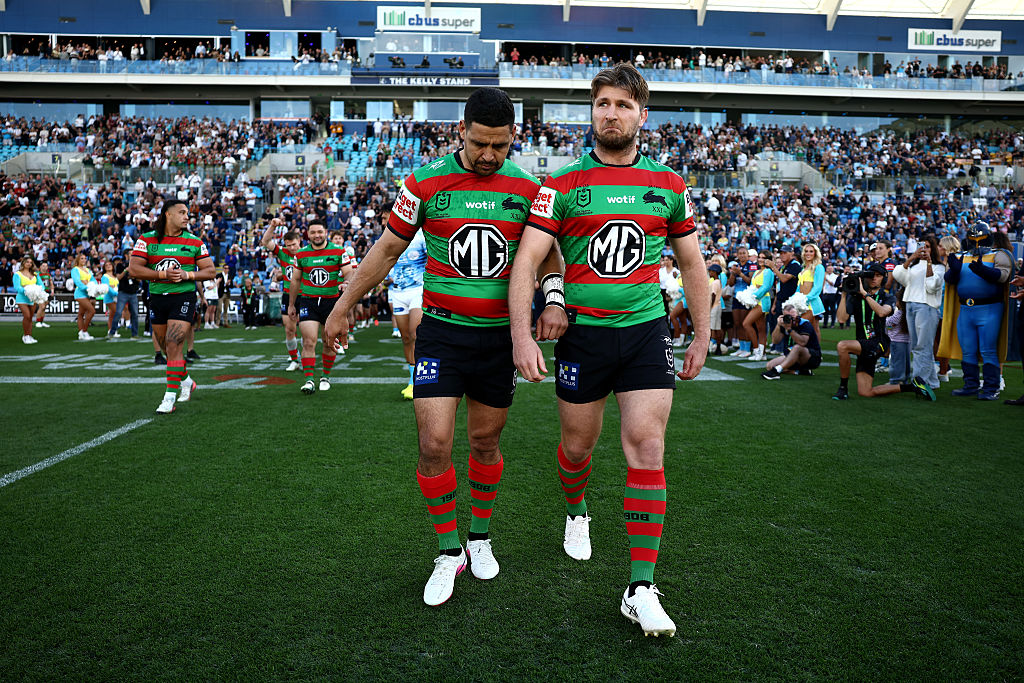
From there, Jeremy Marshall-King, Jason Clark and Claudia Lovett became involved, the plan went to David Kelly, Peter V'landys, Nathan McGurk and Clint Newton, and the Titans and Roosters came aboard after the NRL and RLPA supported it immediately. Game 99 was staged on the Gold Coast, with game 100 against the Roosters at Allianz.
I love the symbolism, but the man matters more. Arrow played every available game last season, won the George Piggins Medal and was one of Souths’ best players before a terminal illness struck him in the prime of his career and young family life. This arrangement probably will never be repeated, and we should pray it never needs to be.
Arrow’s generosity has come home
The extraordinary support for Arrow is no accident; I reckon people are returning the generosity he showed them long before he became ill. Souths heard stories of him completing a requested task three times over and visiting somebody’s friend in hospital for two hours, which tells you why his plight has reached people who do not even follow rugby league.
Arrow has embraced advocacy for people living with MND, while continuing to attend the club each day because training, treatment beside his teammates and the old dressing-room banter help him remain positive. His speech has deteriorated, yet he can still wind up Cody Walker, and that small detail carries enormous warmth.
The footage of Bennett and Clark helping Arrow put on his socks was difficult to watch, but it also captured friendship without fuss or performance. Bennett brings optimism as well as empathy, and Arrow brings immense courage. I am proud to call him a friend.
The Haas signing was a masterstroke
Souths’ acquisition of Payne Haas was probably one of the biggest signings in rugby league history, and the clean execution made it even better: there was no leak, no public shopping tour and no drawn-out circus.
Haas had family connections in Sydney and a strong relationship with Bennett, while Kean’s move to the Dragons created the salary-cap room Souths needed. Haas’s manager contacted Bennett and the club, explained what the Broncos had offered and said Haas would come if Souths matched it; the deal, completed entirely through the agent without Haas visiting Souths, took about 10 or 12 days.
That is elite recruitment. Souths identified the opening, kept its nerve and landed the Broncos’ best player without allowing the chase to become a public auction.
Johnston created a day for generations
Alex Johnston’s record celebration was joyful chaos, and I would never trade those scenes for something sterile. Souths began preparing once Johnston came within five because he had scored five tries twice before, then worked with each opponent and the NRL as the moment approached.
When Johnston broke the record against the Roosters, players surrounded him and John Sutton was responsible for securing the ball, reportedly pushing about eight people aside to retrieve it. The crowd surge became hot and uncomfortable as thousands clustered around, but the striking feature was how many young supporters were on the field.
Those kids may watch rugby league for another 40 or 50 years and tell their own children about that day. Johnston still has another year at Souths before an expected move to PNG for at least one season, possibly two, and his record will stand because nobody else will receive that same blend of longevity, timing and left-edge talent.
Souths repay the debt properly
I reckon Souths are at their best when the club behaves like a community rather than merely a football operation. Nathan Merritt’s stage-four cancer diagnosis prompted a fundraiser that brought in close to a quarter of a million dollars for him and his children, while Kyle Turner’s family received support directed towards his children’s education.
Souths Cares, now in its 20th year with 12 employees, was created to repay the community that helped the club return to the competition. Its Deadly Youth program gives at-risk Indigenous children six months of intensive mentoring and has a 95 per cent success rate keeping participants out of juvenile justice.
The Juniors invest between $2 million and $2.5 million annually so local children and adults can play without registration costs. Add the community classroom at Heffron, where 80 TAFE students undertake diplomas each year, and this is what making a district proud actually looks like.
Expansion needs pathways, not wishful thinking
Papua New Guinea belongs in the competition, but expansion will fail if existing clubs are expected to manufacture 90 or 100 additional players without serious pathways funding. PNG has government backing, extraordinary passion and young athletic talent, although building a side eventually filled by Papua New Guinean players will take between five and 10 years.
Existing clubs may lose one or two players during the difficult opening seasons, and tax-free status understandably leaves them uneasy, but some early pain is acceptable if PNG becomes a genuine producer of elite talent.
A 20th team in an unserviced part of Brisbane or New Zealand would also strengthen the sport, yet three new sides in three years is an enormous demand.
Bennett decides when Bennett is finished
Putting an arbitrary use-by date on Wayne Bennett would be foolish. He is contracted through the end of 2027, Souths hope to add at least another year, and the right approach is allowing Bennett to say when he no longer wants to coach.
His curiosity remains as valuable as his experience. Twelve months ago, Bennett admitted he knew nothing about AI but insisted Souths investigate how it could improve performance, which is not the behaviour of a coach drifting towards retirement.
Cody Walker will also decide after the season whether he wants to continue, with Souths prepared to offer an extension and retain him beyond his playing career. Latrell Mitchell’s future will be assessed after the finals, once the club has seen him healthy and playing extended minutes. Souths were also right to support his temporary withdrawal from media duties because mental health mattered more than feeding the weekly cycle.
Pay the players and fund the future
The coming CBA should reward the players without reopening every scar from the last negotiation. With $5.3 billion available across the new cycle, player payments should rise significantly, and a per-game component has genuine merit because it rewards those actually taking the field.
The established percentages for players, clubs and grassroots should require only modest adjustments, not another war over first principles. The previous CBA and club-funding talks were brutal, but that work helped produce a remarkably healthy NRL balance sheet and better-run clubs.
The RLPA will receive access to the NRL’s books and long-term forecasts before settling its revenue position, so there should be fewer fireworks and more practical work this time. Players built this prosperity through what they did on and off the field; they deserve their share, while pathways must also receive enough to carry the expansion the game is demanding.