Rugby league needs courage, not outrage, weak rulings and popular decisions
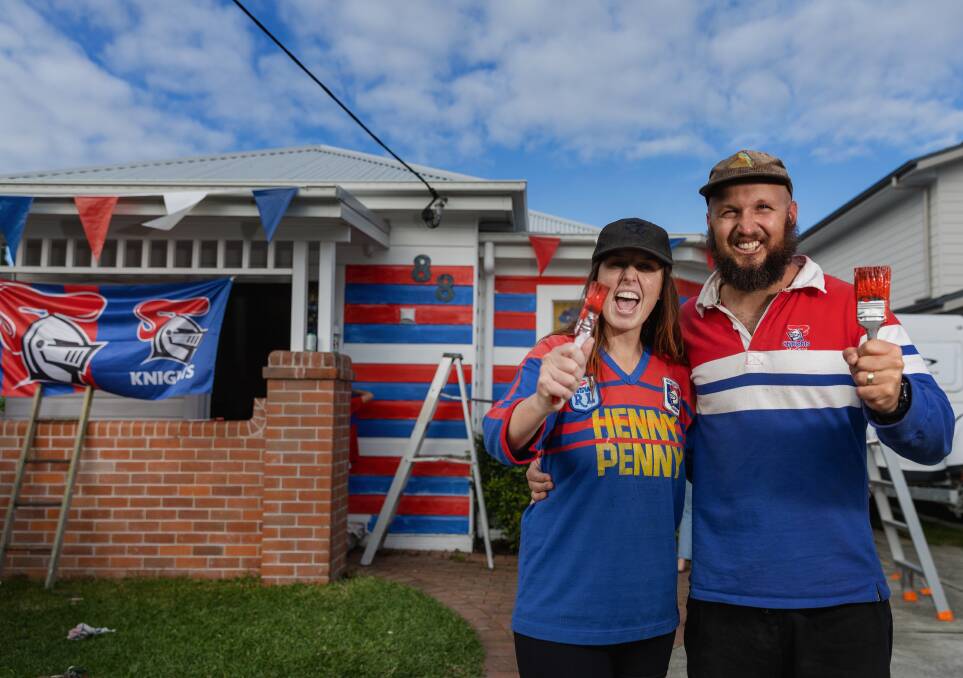
Newcastle still belongs to its people
Newcastle supporters are different. When the Knights are flying, I think they enjoy their football more deeply than any supporter group in the game, because the team has traditionally represented the community rather than merely playing in it.
The blue and red stripes appearing on weatherboard homes tell the story. So does Steve Crowe. He was never Newcastle’s superstar, but he drove the mateship and friendship that held players together, and he still lives every tackle.
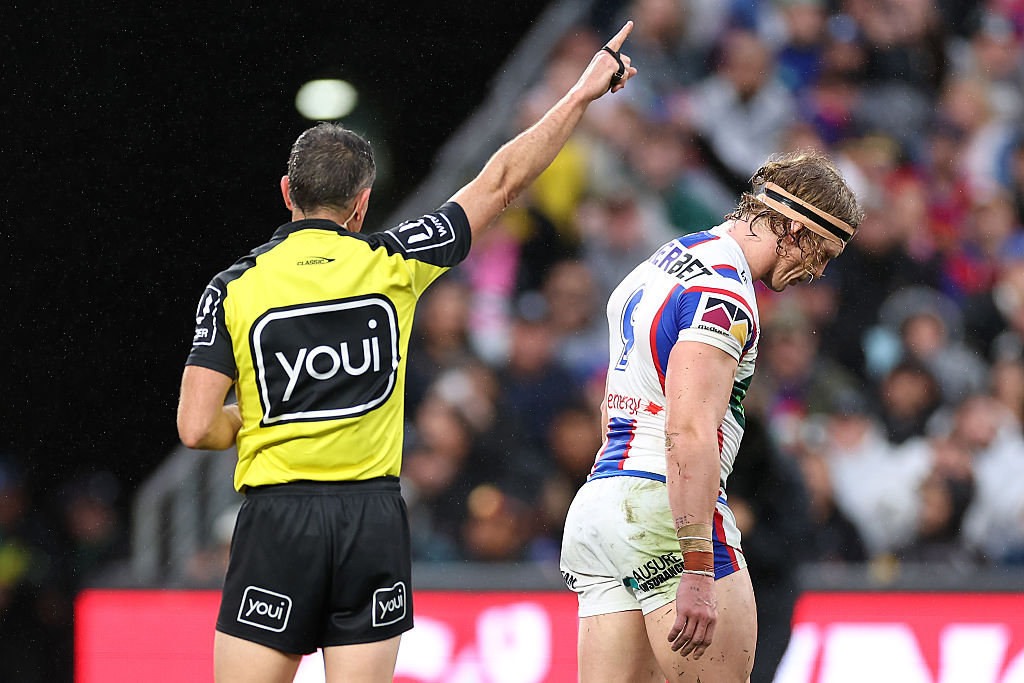
When Phoenix Crossland was sent off, Crowe walked out of a Newcastle pub and headed home through the rain, convinced 12 men could not beat Penrith. His phone began pinging, but he feared checking it and then refused to turn on the television because he might jinx the Knights. He watched an old movie instead.
That is not normal support. It is tribal, irrational and magnificent. It is Newcastle.
Referees are not robots, stop coaching them like robots
The grand final refereeing appointment is no surprise. Ashley Klein had a rotten fortnight and I think he allowed two howlers through from the bunker, while the referee given the whistle has previously handled a grand final very well.
My bigger problem is the system. Referees are being pushed towards sameness, ticking KPIs instead of feeling the contest in front of them, and I think that probably changes how they see and control a game. It produces technically uniform officials without guaranteeing good judgement.
A grand final requires nerve. It needs a referee capable of recognising when to intervene and when to let two sides decide the contest themselves. The Roosters are comfortable with this referee’s style, which is hardly the news Newcastle wanted, but the official cannot enter the game carrying a preferred template for either side.
Referee the match. Not the spreadsheet.
Cleary showed more class than the sewer rats
Nathan Cleary was lying in hospital after surgery and still found the decency to defend Phoenix Crossland. That tells you everything about him.
He made it clear the tackle was accidental, Crossland had apologised and there was no bad blood. Then he told the mob to back off. No theatre. No self-pity. Just class.
Meanwhile, the anonymous heroes of social media were threatening Crossland and spraying venom from behind fake names. Sewer rats. They mistake cruelty for courage because nobody has ever forced them to learn the difference.
Argue about the tackle all you like. That is sport. Threatening a player is not passion. It is cowardice. Cleary was the injured man and still behaved like the adult in the room. The rest can follow his lead or crawl back into the drain.
Crossland’s ban is lawful, and still brutally sad
Phoenix Crossland pleaded guilty and will miss the grand final. Under the system, that is the outcome. Emotion cannot erase the charge simply because the next match is the biggest of his life.
I once argued grand finals should carry greater weight in the disciplinary system because a 300-game player might reach only two of them. I have moved closer to the harder position David Gallop took: if an incident deserves suspension, round two and grand final week cannot operate under different laws.
Still, anybody without sympathy for Crossland is kidding themselves. He is Newcastle’s heart-and-soul player, diving on loose balls, doing the dirty work and putting his head where others refuse to put their feet. I reckon his commitment was central to getting Newcastle this far, which makes his absence genuinely cruel.
The outcome of the tackle must also carry some weight. Victor Radley’s tackle on Herbie Farnworth was penalised but produced no charge, and Farnworth finished the game; Cleary required two operations and faces at least six weeks in a wheelchair, with his return date unknown. Pretending those outcomes are identical would insult common sense.
Pressure-test rules before players pay the price
Billy Slater’s tackling argument deserves examination because every rule change creates consequences somewhere else. Stop defenders barrelling kickers and playmakers after the ball is released, and defenders decelerate; when the ballplayer dummies and runs, they must restart their movement and find another way to complete the tackle.
That helps explain Crossland’s mechanics. He pressured from the inside, slowed as Cleary shaped to pass, then had little momentum when Cleary ran, so he swung around in an attempt to bring him down. It makes tactical sense. It does not automatically justify the technique, particularly when hip-drop tackles also injure middle forwards such as J’m aine Hopgood.
The lesson is bigger than one tackle. The NRL should stop dropping rule changes straight into the top competition and hoping for the best. Trial them in State Cup for a year, put genuine football brains around the trial, and ask coaches and players what unexpected trends appear.
Pressure-test first. Legislate second.
Popular leadership is usually weak leadership
Rugby league bosses should stop chasing applause. The popular decision is often the easiest decision and sometimes the wrong one, particularly when the game’s integrity demands short-term pain.
John Quayle built authority through scarcity; getting an interview with him was like securing an audience with the Pope. Peter V’landys sits at the opposite extreme, making himself highly accessible and servicing the media exceptionally well. Ken Arthurson understood the balance: if he could not discuss one story, he found another so the journalist never left empty-handed.
David Gallop was probably the most measured leader of the lot, and I don’t think he receives enough credit for carrying rugby league through a brutal period and helping rebuild it with Neil Whittaker.
Todd Greenberg did plenty well but wanted to leave his imprint and too often chased popularity. After Parramatta were caught cheating the salary cap, about 12 points were removed while they were allowed to keep playing for competition points. That made no sense. A club caught cheating its rivals should not retain a path to that season’s premiership because punishing it might upset supporters.
Integrity hurts occasionally. That is the point. If every decision is designed to keep everybody happy, nobody is really leading.