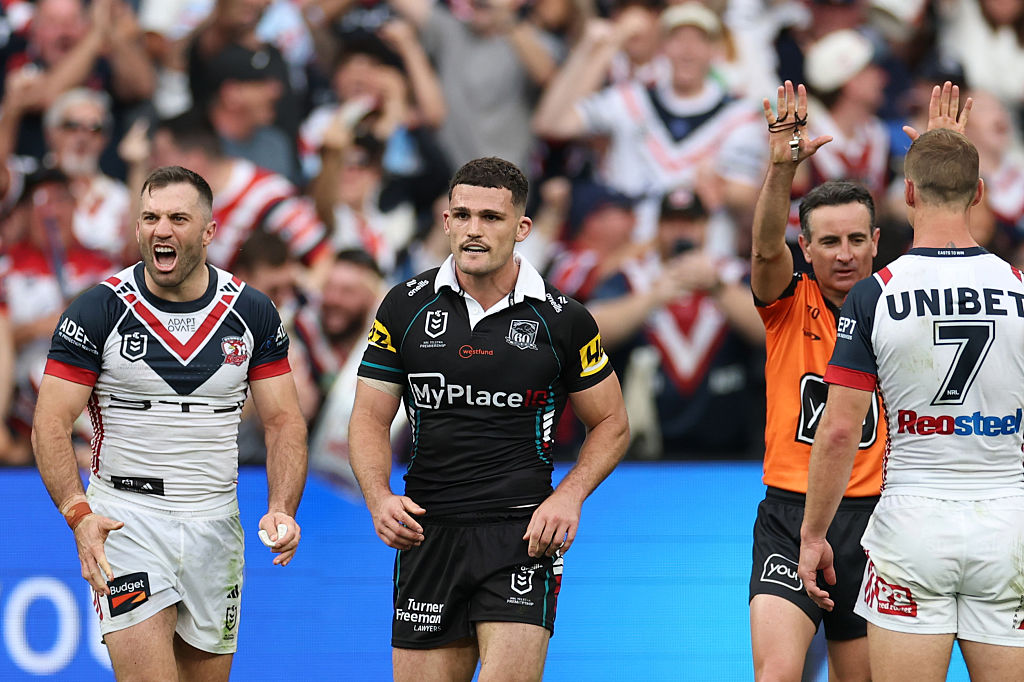
Nathan Cleary will stay and the Penrith Panthers will retain the nucleus of their side
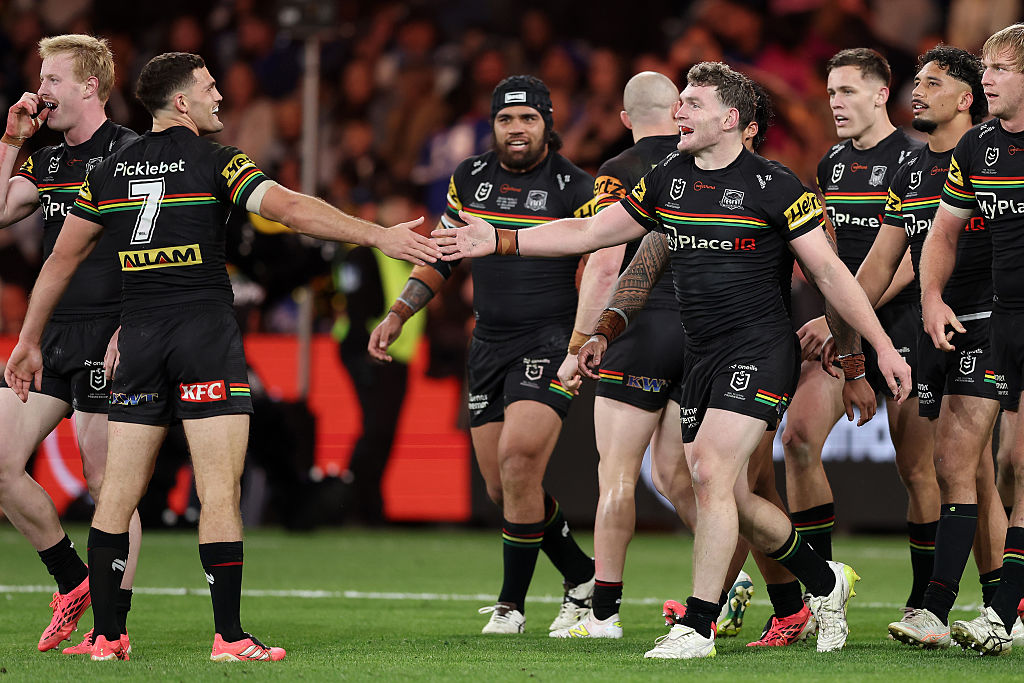
Penrith’s foundations remain strong
I don’t believe Penrith are about to be stripped bare, although they certainly haven’t secured everybody yet. Brian To’o is the only one from the group originally linked with a move to have gone thus far, Mitch Kenny has signed long-term, the chatter among agents is that Isaah Yeo is staying, and I’m also hearing Nathan Cleary will stay at Penrith. That last bit remains chatter and could be wrong.
Liam Martin has postponed negotiations and I think he would like to stay; if Penrith can find the right deal, I reckon he will, unless another club comes hard. The broader lesson is that great systems don’t simply collapse with one departure.
Toluta’u Koula offers another example of patient development. He was a fullback when recruited from Manly’s juniors and I still think that is probably his best position, but his ability to handle centre and wing with ease has made him invaluable. Before his career is finished, I expect him to wear the No.1 jumper.
Good clubs survive an ugly year
I’m convinced Melbourne will bounce back because one transition year does not erase the habits that built the place. They carried a fair number of injuries, their recruitment remains exceptional, the young players underneath are very good and Frank Ponissi is integral to an operation whose work ethic is unbelievable. Craig Bellamy has, I think, won 20 or 21 consecutive opening-round matches, which tells you how seriously Melbourne take preparation.
Cronulla deserve the same sense of perspective. Their gym sits beneath the grandstand, staff share cramped offices, the leagues club has been closed for years and they lack the spas, tracks and polished centres of excellence available elsewhere. Yet they keep making the top eight and contending.
Cameron McInnes is leaving for the UK, and the premiership window could potentially be narrowing, but branding Cronulla failures unless they reach a grand final is nonsense. I think they do an amazing job with what they have.
The Tigers cannot blame one signature
I don’t buy the idea that Jarome Luai’s situation caused the Wests Tigers to fall apart. Players sign elsewhere every day and their current clubs carry on; reducing an entire season to one contract decision lets too many other people off the hook.
Shane Richardson’s exit caught some people by surprise, and the Tigers would be bitterly disappointed after flying early before finishing so poorly, but I still see recruitment work ahead rather than one convenient villain.
Canterbury were disappointing too, although I expect them to keep reshaping the roster until they get it right. Asking him to surrender one role would be a bit rich.
Big promises must earn back trust
R360 faces a credibility problem before it faces a football problem. I’ve heard chatter that the troops are being marshalled again and that there is interest in reviving the concept, but I have had no direct conversations and I won’t be talking to them.
The NRL’s new television deal and projected salary cap make genuine competition much harder now, while players and managers would first demand clear proof of funding. Trust would be the real sticking point after the earlier push disappeared, and no glossy pitch can replace confidence that contracts will be honoured.
That does not make me hostile to ambition. I have no issue with rugby league protecting itself from a rival, just as I have no issue with new competitions attempting something bold. But if somebody wants players to risk short careers and family security, certainty must come before salesmanship.
England needs the NRL’s muscle
I’m completely behind NRL investment in Super League because English rugby league needs more than affection to survive. Most Australians head there to extend their careers or because an Australian contract is unavailable, with a solid deal around £120,000 and marquee players able to earn £175,000 or more.
The deeper concern is stability. Over many years I’ve probably had four or five clubs fail to pay players, while my clients at Bradford watched teammates wash cars as the club fought to stay alive. Privately funded clubs have kept the competition breathing, so owners who have poured in tens of millions understandably won’t surrender their passion cheaply, but NRL money, television expertise and cross-promotion could give the competition genuine momentum.
Las Vegas points in the same direction. Whatever the cost, it is a terrific launch and I can eventually see a global round, matches around the world and English crossover events. Rugby league should keep challenging itself.
The salary cap is not guesswork
Third-party deals and notional values are often portrayed as mysterious, but the underlying principles are straightforward. A third party must operate entirely at arm’s length from the club, the NRL inspects the agreement and investigates the relationship, while clubs are allowed to make an introduction without controlling the arrangement.
Some clubs are better at finding those opportunities, Brisbane do particularly well, and struggling clubs should work harder, perhaps by appointing somebody specifically to build connections, rather than simply complaining about an advantage.
Notional value is also common sense. Age, market interest, negotiations and genuine rival offers all matter; Joash Papalii had no other NRL offer, for instance, which naturally affected how his deal could be judged. Matt Faulkner and the salary-cap team can seek emails and phone records before deciding whether an agreement is real. These calls are not made flippantly.
A manager earns his keep in the hard hours
The real work of player management starts when the future becomes frightening. Jack de Belin wants to continue and his body is healthy, while Jack Todd, Blake Wilson and Max McCarthy are among those facing uncertainty. Bills still arrive, families need plans and sometimes the honest answer is that no opportunity can be found.
The pressure becomes fiercer when a player lands in serious trouble. Usually the player or club rings the agent immediately; then come the lawyers, club meetings, media calls, training decisions and careful instructions about saying nothing until legal advice arrives. Careers are on the line from the opening moments, so calm strategy matters more than noise.
That is why agents must be direct. There are about 150 accredited agents, although a good portion are probably inactive, and the application process includes a business plan, character checks, an interview, induction and an exam. Stringent standards are necessary because this job carries somebody else’s livelihood.
Laurie Daley earned the last word
Laurie Daley was entitled to challenge his critics after delivering an Origin victory. Coaching at that level is “stress on steroids”, and suggestions that his pre-game speeches put players to sleep were published without quotes or a right of reply. That is not healthy journalism.
Daley felt the pressure but remained respectful, held no grudges and genuinely believed his team would win in Brisbane. For a man who captained Australia, became an Origin legend and won, I think, three premierships, I suspect that victory was probably the most satisfying of his career, even if he would never say so publicly.
I extremely doubt he will coach at senior level again. He will support the Blues and offer Matt King whatever advice is needed, but there was something fitting about Daley walking away having answered the noise with the only response that truly lasts: winning.
Adam Ritson’s 50th is the victory that matters
Adam Ritson reaching 50 is the story that stays with me. He debuted in Cronulla’s front row at 16, was selected by Arthur Beetson and had the speed, strength and offload to become an Australian player, perhaps even a superstar.
Then a high tackle while playing for Parramatta led to scans, which found a cyst on his brain. What was expected to be a simple operation brought terrible complications: 17 days on life support, rehabilitation, memory problems, severe physical wasting and the loss of his ability to walk or talk.
Yet Ritson is still the happy-go-lucky, jovial bloke he always was. Even as a teenager he was ahead of his time, securing a 48-hour escape clause from a Super League contract before his eventual ARL deal became a pivotal moment in the code war.
Careers, contracts and competitions come and go. A champion bloke making it from the brink at 20 to his 50th birthday is bigger than all of them, and I’m enormously proud of him.