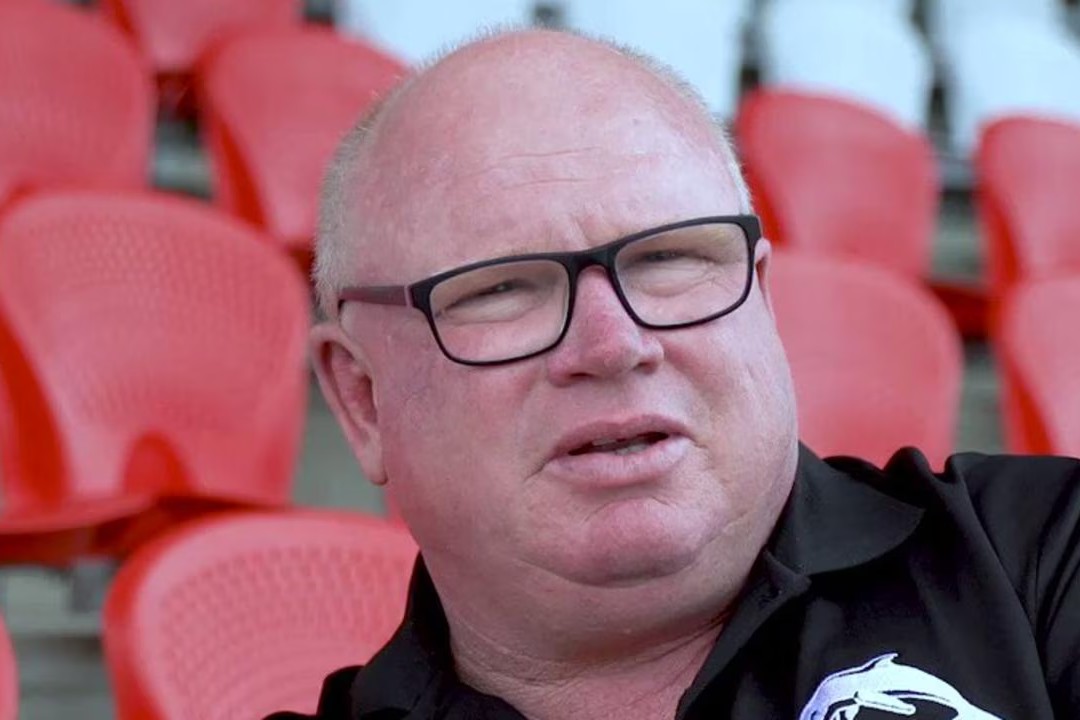
Wes Heritage has spent a lifetime proving funerals are really about the living
The family business began with a bet
I reckon the Heritage story could only have begun in a country town, where one disappointing farewell was enough to change a family’s direction for generations. Heritage’s grandfather saw the poorly handled funeral of a popular homeless local, decided he could do better and apparently bet Boss Christie that he would.
He trained, learnt the profession and opened a funeral home in Healesville in 1934. By the time the family sold during the 1980s, the business was conducting close to 1,000 funerals a year. Heritage’s father spent 60 years as an undertaker, while Heritage declared his own intentions early, telling his prep teacher he would grow up to bury dead people and drink beer.
I get why that line earns a laugh, but I see the inheritance as something serious: this was never merely employment; it was the family’s place in its community.
Death was part of his childhood, not something hidden away
I admire the care Heritage’s father took in introducing a boy to work most adults could not stomach. Heritage lived at the funeral home from birth, with the chapel and mortuary in the backyard, and began helping with nighttime transfers at 12, carrying the light end of a stretcher before collapsible wheeled versions existed.
He had already watched his father dress and prepare deceased people while sitting on the mortuary bench, but it was never confronting because it was simply part of growing up. His father still protected him from accidents and homicides until he was mature enough, then bought him a new suit before taking him along properly.
The lesson that stayed was wonderfully plain: the living are the ones you have to keep an eye on.
Listening matters more than ceremony
The best funeral directors do not impose a template; they listen, and Heritage learnt that through one of the loneliest services imaginable. As a young man, he arranged the chapel, minister, flowers and newspaper notice for a woman’s funeral even after her husband said they had no friends, because Heritage could not believe nobody would come.
Nobody did. He sat beside the elderly widower in an otherwise empty chapel and realised he had been telling the family what a funeral should be instead of hearing what they needed. Another service for a serviceman on the Gold Coast was attended only by Heritage and his staff, an absence he found deeply confronting.
That is why his definition of the work lands: care for the deceased, then walk the living through grief.
A proper farewell needs tears and laughter
Modern funerals are better for becoming personal. Heritage began when the pianist failing to arrive was about the worst technological mishap available; now there are streamed services, screen tributes, printed handouts, multiple speakers and venues far beyond churches.
Heritage welcomes that evolution because families can choose colour, humour, photographs and stories rather than inherit somebody else’s idea of solemnity. He reckons 45 or 50 minutes is generally enough to tell a life without people shuffling and checking their watches, and he wants celebrants to sound natural rather than adopting a fake radio voice.
His strongest principle is also the simplest: “the healthiest funerals are full of tears and laughter.” I reckon any farewell containing only one of those has missed half the person.
Doing nothing after death is the saddest choice
I worry about cremations without any ceremony, particularly when communities are already carrying serious mental-health pressures and funeral directors are dealing with suicides, especially among young men. I do not believe a farewell needs to be formal, religious or even held with the casket present, but people need somewhere to gather and acknowledge what has happened.
I believe the funeral is for the living because friends and relatives need to support one another and find a starting point for healing. Avoiding the moment does not remove the grief; it only denies people the shared language and company that can make grief bearable.
For me, this goes beyond death. We lose jobs, pets, dreams and relationships throughout life, and I believe learning to face loss together is healthier than pretending bad news never arrived.
There is no such thing as a routine funeral
Funeral work demands calm when the plan falls apart. Heritage remembers a burial at sea requiring permits and a registered zone about three hours off the Gold Coast, beyond the continental shelf in roughly 1,000 metres of water. Twelve mourners and a priest went out; everybody, including the widow, became seasick.
Back on land, wet graves can collapse and hearses can refuse to start. When a priest once texted a family to say he was unwell, they handed Heritage a Bible and told him he had attended enough services to know what to say. “I was Father Wes,” he recalls.
For all those hazards, his team carries a 39-year record without dropping a casket. That is the sort of unbeaten streak worth protecting.
Families should ask what they are paying for
Funeral costs are too important for embarrassment or silence. Heritage estimates a full cremation service at roughly $7,500 to $10,000, while burial in his area can run to about $13,000 to $15,000 including the grave; above-ground crypts can climb as high as $200,000, although few families choose them.
Coffins at his business range from $990 to $12,000, yet Heritage does not believe in heavy upselling and says most families choose conservatively. He is also wary of funeral insurance: miss a premium and the cover disappears, die within the first 12 months and it does not pay, while keeping it beyond seven years can mean paying too much.
Heritage prefers funeral bonds, although he acknowledges insurance has been a godsend for some families. His practical message is sound: ask questions before signing anything.
The work leaves marks, but it also teaches you to live
The emotional cost of this vocation cannot be left at the chapel door. Heritage still remembers the 1984 road crash that killed six people aged 21 or younger in Healesville, where his father knew every family and personally carried all six through a horrific period. Heritage was collected from an under-17s function because his father needed help, then sat at the funeral home as families arrived.
He has since buried mates and says young funerals remain the worst part of the work. After conducting a mate’s service, he often skips the wake and has a beer alone because he is exhausted from putting his heart into getting the farewell right.
Yet death has given Heritage a fierce appetite for life: “If you've got something you wanna do, just do it. Don't wait till you retire.” That is not a slogan from a man guessing. It is advice earned across a lifetime.