Canterbury blew up their identity & now the confusion is everywhere
Boyd deserves the job, but the process exposes Origin’s problem
Darius Boyd deserves a fair crack at coaching Queensland, although his appointment on a two-year deal raises an uncomfortable question: why did no great Queenslander want one of the biggest jobs in rugby league?
Boyd had the courage to put his hand up when others protected their reputations, and that matters. I think he has done some work at the Broncos without actually serving as an assistant, while his two successful series with the Queensland under-19s provide more tangible coaching evidence than the sceptics will admit.
The broader issue is the shrinking pool. With 17 NRL coaches soon becoming 18 and then 19, Origin cannot access most of the country’s leading club coaches, leaving selectors to choose from assistants, former players and men outside the NRL system. It is an unfortunate direction, but it is the direction representative coaching is heading.
Billy Slater won three of five series and went close in the other two, yet even a genius encountered bumps. Origin gives a coach three games to prove himself, an avalanche of commitments and nowhere to hide. Laurie Daley looked like he had been to hell and back during the Blues series. The prestige is enormous; so is the personal cost.
Boyd’s quiet authority can become his greatest strength
Boyd should not be mistaken for an Origin lightweight simply because he never sold himself like one. His record is formidable: 337 first-grade games, 17 Origin tries, a Clive Churchill Medal and 23 wins from 23 appearances for Australia.
He was publicly introverted but far more expressive inside team environments, where trust had to be earned before he opened up. That history can become his coaching foundation because Origin camps are built on relationships at speed; Boyd will demand trust from his players and return it, which is a stronger starting point than delivering thunderous speeches for television.
I’m also convinced Wayne Bennett will remain influential. He and Slater were in regular dialogue, including conversations about the strengths and weaknesses of players, and Bennett remains the godfather of Queensland rugby league. Boyd would be mad not to use that resource.
Cameron Smith will eventually coach either Queensland or an NRL club — I think it is a matter of when, not if — but his current life of golf and media carries none of the reputational danger. Boyd has accepted the risk now. That should be admired, not treated as evidence he got the job by default.
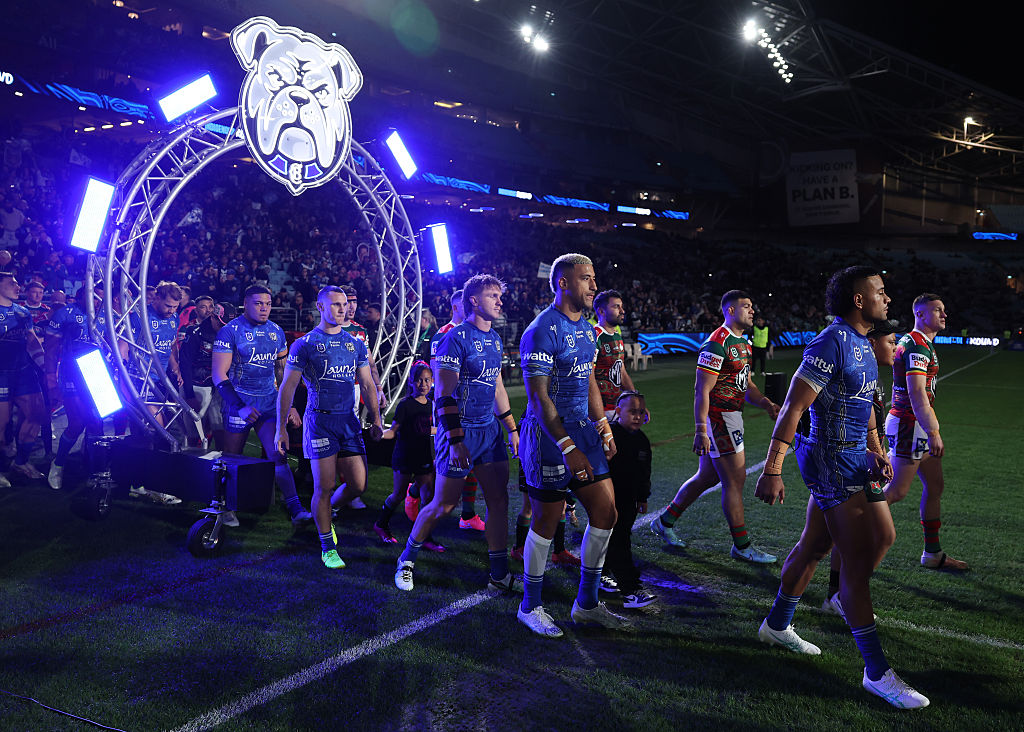
Squeezing out Mahoney ripped out Canterbury’s competitive heart
Canterbury made a fundamental mistake releasing Reed Mahoney with a year remaining on his contract, and their collapse has exposed how badly they underestimated what he provided.
Mahoney was irritating, confrontational and permanently in the opposition’s face. Good. That was the point. The Dogs of War mentality was never merely about belting opponents; it was about unsettling them, dragging them away from their plan and making every contest unpleasant. Mahoney did that while tackling anything in the middle.
He also carried Canterbury through the ugly stage of Cameron Ciraldo’s rebuild. The Bulldogs finished 15th in Ciraldo’s first season, and Mahoney, having been made captain, fronted the press conferences and absorbed the criticism while the club dug the well. Stephen Crichton’s elevation worked initially, but that does not excuse discarding the bloke who performed the dirty work.
Bailey Hayward can contribute, but he is not the same starting hooker. His step before passing from dummy-half costs precious time, whereas Mahoney delivers straight from the deck and forces the markers to decide immediately. Half a second sounds tiny until an entire attack keeps arriving half a second late.
The Bulldogs have built a positional jigsaw with no picture
Canterbury’s roster is not short of talent; it is crippled by positional confusion. They have Lachlan Galvin, a five-eighth, playing halfback, Stephen Crichton shifted away from the position where he is among the world’s best, Matt Burton used in the centres and Hayward, a halfback, at hooker. It will not work because too many players are performing jobs that are not natural to them.
Sean O’Sullivan is the obvious correction. He is a clever, organising halfback who studies opponents and can overcall Galvin, allowing the younger playmaker to attack from five-eighth without feeling responsible for every possession. Canterbury produced their best performance of the season against the Tigers when O’Sullivan played. That should not require a supercomputer to decode.
Galvin is overplaying his hand because nobody is controlling him, while Canterbury’s right side dominates possession and Crichton waits for opportunities on the left. Put Crichton back at right centre, give Galvin an organising partner and stop asking elite footballers to impersonate somebody else.
The identity crisis runs deeper. Canterbury cherry-picked talent from Penrith but have not recreated the connected, relentless Dogs of War pack that defined the club. Leo Thompson has struggled after an early injury and has not delivered the impact expected from an $800,000 forward. There is enough class to perform far better, but class without cohesion is merely an expensive team sheet.
Souths have turned adversity into genuine September momentum
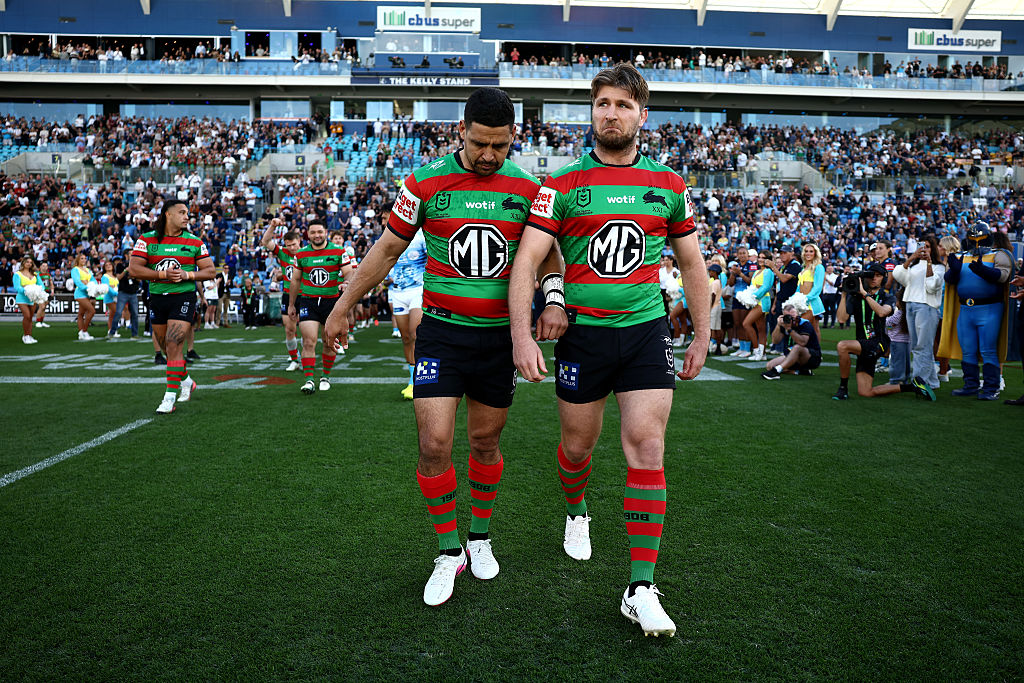
South Sydney are the side most capable of catching fire in the finals because adversity has hardened rather than fractured them. Jai Arrow’s 100th and final NRL game will be an extraordinarily emotional occasion, and his stoicism and positivity have galvanised the club.
Souths knew about his situation in January, protected his privacy and family, and prevented it becoming public until he was ready. In rugby league, where secrets usually have the shelf life of warm milk, that was a remarkable display of loyalty and institutional discipline.
The football case is just as compelling. Latrell Mitchell is back, Talis Duncan and Fifita are in form, and Cam Murray remains, in my view, the best middle forward in the game. Jai grey now has an opportunity at fullback, with Matthew Dufty named on the bench, and grey’s natural speed can turn the half-chances that decide finals into points or rapid play-the-balls.
The Roosters are resting nine gun players, so Souths should win comfortably, but this is bigger than one night. Wayne Bennett has guided an injury-hit squad through Nathan Merritt’s situation, Arrow’s ordeal and into the top eight. They are not making up the finals numbers. They are dangerous.